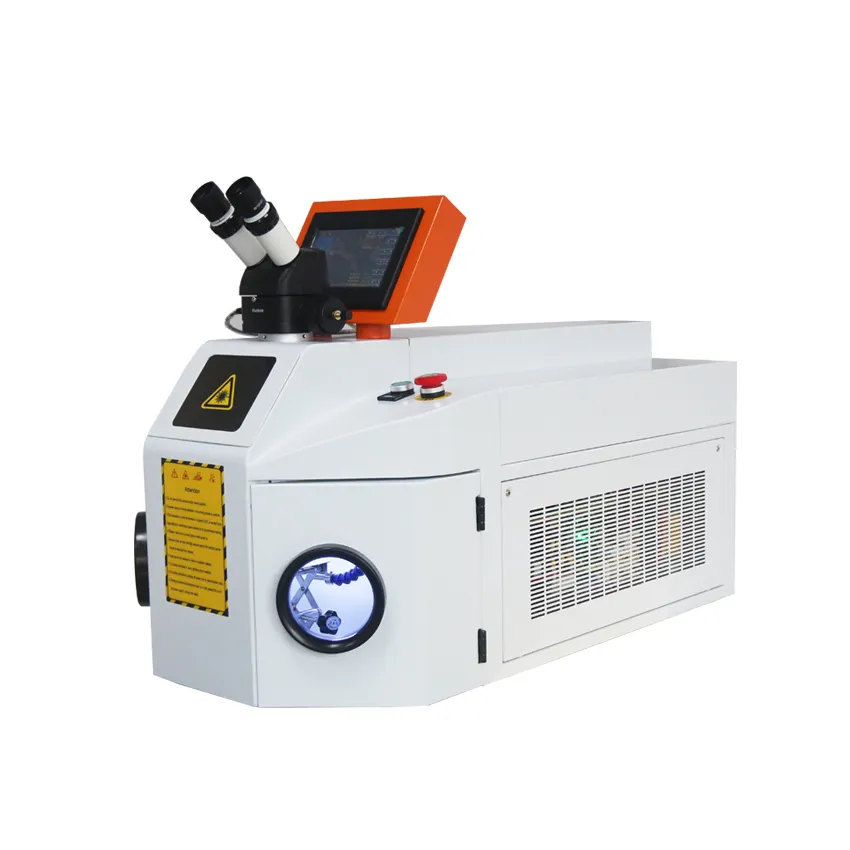
laser wire feed welder-0

Advanced Laser Wire Feed Welder Technology - Precision Welding Solutions for Modern Manufacturing

Get a Free Quote

Our representative will contact you soon.
Email
Name
Company Name
Message
0/1000

laser wire feed welder

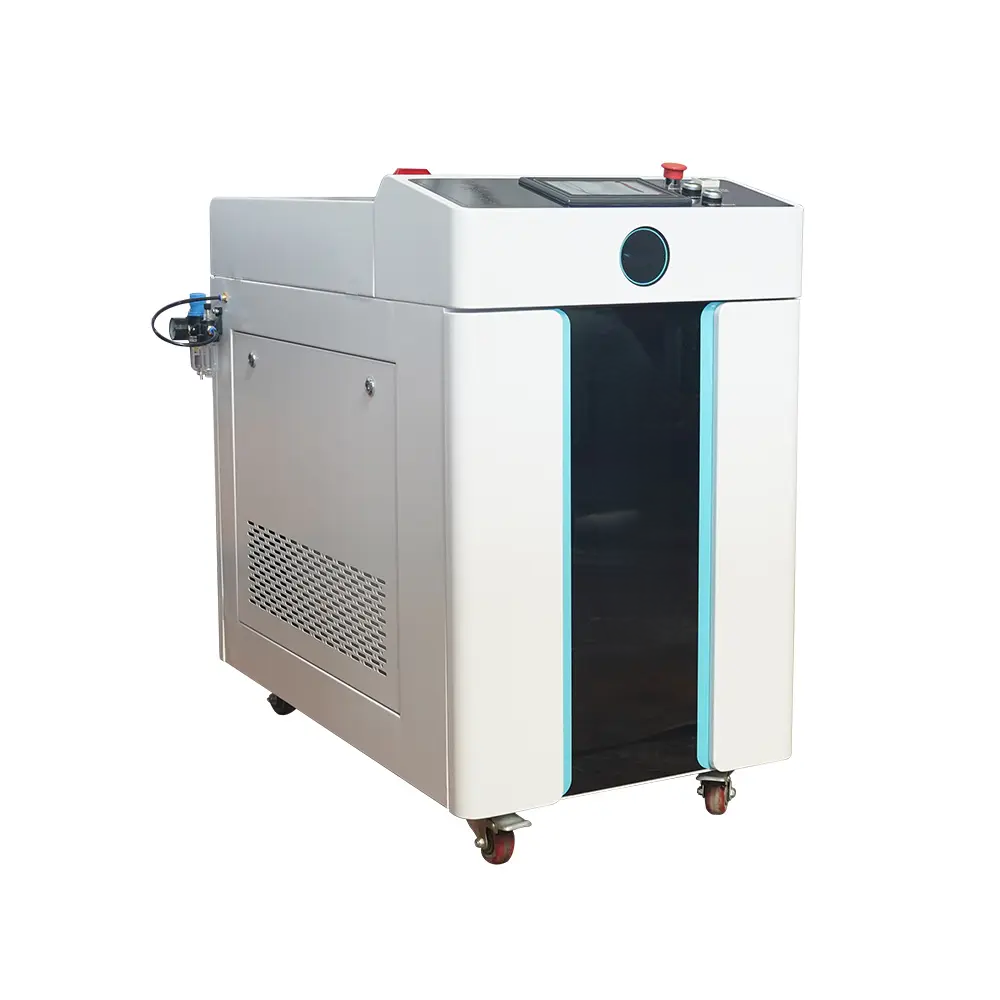
A laser wire feed welder represents a cutting-edge fusion technology that combines the precision of laser welding with the efficiency of automated wire feeding systems. This advanced welding solution utilizes a high-powered laser beam as the primary heat source while simultaneously feeding filler wire into the weld pool, creating superior joint quality and enhanced control over the welding process. The laser wire feed welder operates by directing a concentrated laser beam onto the workpiece surface, generating intense localized heat that melts the base material. Simultaneously, the integrated wire feeding mechanism delivers precise amounts of filler material directly into the molten pool, ensuring consistent weld composition and optimal mechanical properties. The technological architecture of these systems incorporates sophisticated beam delivery optics, real-time process monitoring sensors, and computerized control interfaces that enable operators to maintain precise parameter control throughout the welding cycle. Key technological features include adjustable laser power output ranging from several hundred watts to multiple kilowatts, variable wire feed speeds that can be synchronized with welding travel rates, and advanced beam shaping capabilities that optimize energy distribution across the weld zone. Modern laser wire feed welder systems often integrate multi-axis robotic platforms, enabling complex three-dimensional welding operations with exceptional repeatability and accuracy. The wire feeding subsystem typically accommodates various filler materials including stainless steel, aluminum alloys, nickel-based superalloys, and specialized welding wires designed for specific metallurgical requirements. Applications span diverse industries including aerospace manufacturing, automotive production, shipbuilding, pipeline construction, and heavy machinery fabrication. These systems excel in scenarios requiring deep penetration welds, minimal heat-affected zones, and superior cosmetic appearance. The laser wire feed welder technology particularly benefits applications involving dissimilar material joining, precision component assembly, and high-volume production environments where consistency and quality are paramount considerations.

New Product Recommendations

The laser wire feed welder delivers exceptional advantages that transform traditional welding operations into highly efficient and precise manufacturing processes. Speed represents one of the most significant benefits, as these systems achieve welding velocities substantially faster than conventional arc welding methods. The concentrated energy density of the laser beam enables rapid heating and cooling cycles, reducing overall production time while maintaining superior weld quality. This increased throughput directly translates to enhanced productivity and reduced manufacturing costs for businesses seeking competitive advantages in their respective markets. Precision control stands as another crucial advantage, allowing operators to achieve exact weld profiles with minimal variation between successive joints. The laser wire feed welder maintains consistent penetration depths and bead geometry through computer-controlled parameter management, eliminating the human error factors that commonly affect manual welding operations. This reliability ensures that every weld meets stringent quality specifications, reducing rejection rates and rework requirements that drain resources and delay project completion. Heat input management provides significant metallurgical benefits, as the focused laser energy creates narrow heat-affected zones that preserve the base material properties surrounding the weld area. This characteristic proves especially valuable when working with heat-sensitive alloys or components requiring specific mechanical properties after welding. The reduced thermal distortion minimizes post-weld machining requirements and maintains dimensional accuracy in precision assemblies. Material versatility expands application possibilities, as laser wire feed welder systems successfully join diverse metal combinations including aluminum to steel, titanium alloys, and exotic materials used in aerospace applications. The ability to precisely control filler wire composition and deposition rates enables metallurgists to engineer weld properties that match or exceed base material characteristics. Automation compatibility represents a strategic advantage for manufacturers implementing Industry 4.0 initiatives, as these systems integrate seamlessly with robotic platforms and manufacturing execution systems. Remote operation capabilities enhance worker safety by removing personnel from hazardous environments while maintaining full process control. The non-contact nature of laser welding eliminates electrode wear and reduces consumable costs compared to traditional methods. Environmental benefits include reduced fume generation and lower energy consumption per unit length of weld, supporting sustainability initiatives while improving workplace conditions for welding personnel.

Latest News

How do handheld laser cleaning machines contribute to environmentally friendly cleaning practices?

19

Nov

How do handheld laser cleaning machines contribute to environmentally friendly cleaning practices?

Modern industrial cleaning practices are undergoing a revolutionary transformation as companies seek more sustainable and environmentally conscious solutions. Traditional cleaning methods often rely on harsh chemicals, abrasive materials, and process...
View More
How to Choose the Right Portable Laser Welding Machine for Your Business?

19

Nov

How to Choose the Right Portable Laser Welding Machine for Your Business?

Manufacturing businesses today face increasing pressure to improve efficiency while maintaining exceptional quality standards. The advent of portable laser welding machines has revolutionized the welding industry by offering unprecedented mobility, p...
View More
How Does Scanlab Technology Improve the Precision of Laser Applications?

19

Nov

How Does Scanlab Technology Improve the Precision of Laser Applications?

Scanlab Technology represents a revolutionary advancement in laser precision control systems, fundamentally transforming how industries approach laser-based manufacturing and processing applications. This cutting-edge technology has established new b...
View More
Fixed vs Variable Beam Expander: Which to Choose?

21

Oct

Fixed vs Variable Beam Expander: Which to Choose?

Understanding Optical Beam Expansion Technology In the world of optics and laser applications, beam expanders play a crucial role in manipulating light beams for various scientific and industrial purposes. These sophisticated optical instruments are ...
View More

Get a Free Quote

Our representative will contact you soon.
Email
Name
Company Name
Message
0/1000

laser wire feed welder

Advanced Beam Control Technology for Unmatched Precision

Advanced Beam Control Technology for Unmatched Precision

The laser wire feed welder incorporates state-of-the-art beam control technology that revolutionizes welding precision and consistency across diverse manufacturing applications. This sophisticated system utilizes advanced fiber optic delivery mechanisms combined with precision focusing optics to deliver laser energy with exceptional accuracy and repeatability. The beam control architecture enables real-time adjustment of focal position, beam diameter, and power distribution patterns, allowing operators to optimize welding parameters for specific joint configurations and material combinations. Dynamic beam shaping capabilities represent a breakthrough feature that distinguishes modern laser wire feed welder systems from conventional welding technologies. These systems can modify beam geometry from circular to elliptical patterns, adjust power density distribution across the beam profile, and even create oscillating beam patterns that enhance weld pool dynamics and filler wire integration. The precision control extends to focal length adjustment, enabling operators to maintain optimal energy density regardless of workpiece thickness variations or joint accessibility constraints. Advanced feedback systems continuously monitor beam quality and automatically compensate for any deviations that could affect weld integrity. The integration of high-resolution cameras and spectroscopic sensors provides real-time process visualization, enabling immediate detection of process anomalies such as insufficient penetration, porosity formation, or filler wire feeding irregularities. This monitoring capability ensures that every weld meets predetermined quality standards while providing comprehensive documentation for quality assurance protocols. The beam control technology also incorporates safety features including automatic shutdown mechanisms, protective housing systems, and interlock controls that prevent accidental exposure to laser radiation. Remote operation capabilities allow skilled technicians to control welding operations from safe distances while maintaining full access to process parameters and monitoring data. The precision achieved through advanced beam control technology translates directly into superior weld quality, reduced material waste, and enhanced production efficiency that delivers measurable return on investment for manufacturing operations seeking to improve their competitive positioning.
Intelligent Wire Feeding System for Optimal Material Deposition

Intelligent Wire Feeding System for Optimal Material Deposition

The intelligent wire feeding system integrated within laser wire feed welder technology represents a paradigm shift in filler material management and deposition control. This sophisticated subsystem incorporates precision servo motors, advanced tension control mechanisms, and real-time feedback sensors that ensure consistent wire delivery throughout the welding process. The wire feeding architecture accommodates multiple wire diameters ranging from ultra-fine 0.6mm wires for delicate applications to heavy-duty 1.6mm wires for structural welding requirements. Speed control capabilities span from precise low-speed deposition for intricate assemblies to high-velocity feeding for production welding scenarios, with infinitely variable adjustment throughout the operational range. The intelligent control system synchronizes wire feed rate with laser power output and travel speed, maintaining optimal filler-to-base metal ratios that ensure superior mechanical properties in finished welds. Advanced wire straightening mechanisms eliminate inconsistencies caused by packaging memory, ensuring smooth wire delivery that prevents feed irregularities and associated weld defects. The system incorporates multiple wire storage options including large-capacity spools for continuous production runs and quick-change cartridge systems that minimize changeover time when switching between different filler materials. Automatic wire threading capabilities reduce setup time and eliminate the manual handling requirements that can introduce contamination or geometric inconsistencies. The laser wire feed welder system monitors wire consumption in real-time, providing advance warning of low material conditions and automatically documenting usage for inventory management purposes. Temperature compensation features adjust feeding parameters based on ambient conditions and wire material characteristics, ensuring consistent performance across varying environmental conditions. The intelligent system also includes wire break detection, automatic restart capabilities, and diagnostic functions that identify potential feeding issues before they affect weld quality. Contamination prevention measures include inert gas purging of the wire path and sealed delivery systems that protect filler materials from atmospheric exposure. The wire feeding system supports specialized applications including multi-wire configurations for high-deposition welding and precise alloy blending through simultaneous feeding of different wire compositions, enabling metallurgical tailoring that optimizes weld properties for specific service requirements.
Comprehensive Process Monitoring and Quality Assurance

Comprehensive Process Monitoring and Quality Assurance

The comprehensive process monitoring and quality assurance capabilities of laser wire feed welder systems establish new standards for welding reliability and traceability in critical manufacturing applications. This advanced monitoring architecture integrates multiple sensor technologies including high-speed cameras, pyrometers, spectral analyzers, and acoustic emission detectors that collectively provide complete visibility into every aspect of the welding process. Real-time temperature monitoring ensures that thermal cycles remain within specified parameters, preventing overheating that could compromise material properties or underheating that results in incomplete fusion. The monitoring system tracks weld pool geometry, penetration depth, and cooling rates with microsecond precision, enabling immediate detection of process deviations that could affect joint integrity. Advanced image processing algorithms analyze weld bead formation in real-time, automatically adjusting process parameters to maintain consistent profile geometry and surface finish characteristics throughout extended production runs. The quality assurance system incorporates statistical process control methodologies that trend key welding parameters over time, identifying gradual process drift before it affects product quality. Comprehensive data logging captures every process variable including laser power fluctuations, wire feed rate variations, travel speed deviations, and environmental conditions for complete weld traceability. This documentation capability proves essential for aerospace, nuclear, and medical device applications where regulatory compliance requires detailed process records. The laser wire feed welder monitoring system includes predictive maintenance features that analyze equipment performance trends and provide advance warning of component wear or calibration drift. Automated quality assessment algorithms compare each weld against predetermined acceptance criteria, automatically flagging non-conforming joints for further inspection or rework. Integration with manufacturing execution systems enables seamless data transfer to quality management databases and production planning systems. Remote monitoring capabilities allow quality engineers to supervise multiple welding stations simultaneously while receiving instant notifications of process anomalies or quality concerns. The system supports customizable alert thresholds that can be adjusted based on specific application requirements and quality standards. Post-weld analysis tools provide detailed reports including statistical summaries, trend analyses, and comparative studies that help optimize welding procedures and improve overall process capability.

Get a Free Quote

Our representative will contact you soon.
Email
Name
Company Name
Message
0/1000