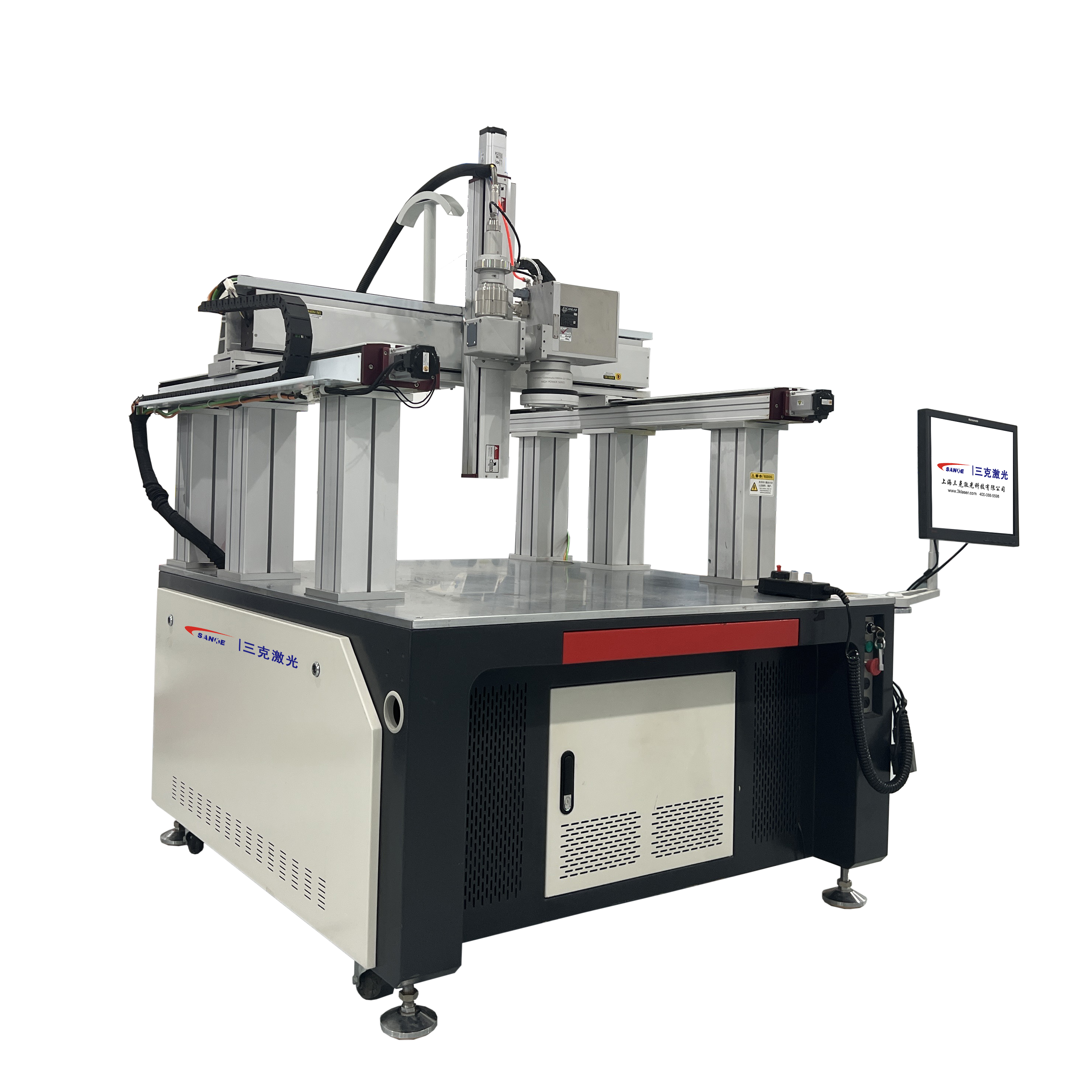
semi automated welding-0

Semi Automated Welding Solutions: Advanced Technology for Superior Manufacturing Efficiency

Get a Free Quote

Our representative will contact you soon.
Email
Name
Company Name
Message
0/1000

semi automated welding

Semi automated welding represents a revolutionary approach to metal joining that combines the precision of automated systems with the flexibility of manual control. This advanced welding technology utilizes computer-controlled equipment to perform consistent, high-quality welds while allowing operators to maintain oversight and make real-time adjustments. The semi automated welding process incorporates sophisticated machinery that manages critical parameters such as arc length, travel speed, and wire feed rates, ensuring optimal penetration and bead formation across various materials and thicknesses. The system features programmable controls that store welding procedures for different applications, enabling operators to quickly switch between projects without extensive setup time. Modern semi automated welding equipment includes digital displays that provide real-time feedback on voltage, amperage, and gas flow rates, allowing for immediate corrections and maintaining weld quality throughout production runs. The technology supports multiple welding processes including MIG, TIG, and flux-cored welding, making it versatile for diverse manufacturing requirements. Key technological features include automatic torch positioning systems, adaptive voltage control, and synchronized wire feeding mechanisms that respond instantly to changing conditions. The equipment incorporates safety features such as automatic shutdown protocols and protective barriers that enhance operator safety while maintaining productivity. Semi automated welding finds extensive applications in automotive manufacturing, shipbuilding, pipeline construction, and heavy machinery fabrication where consistency and efficiency are paramount. The technology excels in repetitive welding tasks such as seam welding, fillet welding, and circumferential welding where human operators can focus on quality control while machines handle the mechanical aspects. Industries benefit from reduced training requirements compared to fully manual welding while achieving superior results compared to basic automation systems.

New Products

Semi automated welding delivers exceptional productivity gains that directly translate to reduced manufacturing costs and faster project completion times. The technology eliminates human inconsistencies that plague manual welding operations, producing uniform weld quality that meets strict industry standards while reducing rejection rates and rework expenses. Operators experience significantly reduced fatigue since the equipment handles physically demanding aspects of the welding process, allowing workers to maintain focus on quality oversight throughout extended production runs. The system reduces material waste through precise control of filler metal deposition, optimizing consumption rates and minimizing costly overruns that occur with less controlled welding methods. Training requirements decrease substantially compared to traditional manual welding techniques, enabling facilities to develop skilled operators more quickly and cost-effectively. Semi automated welding systems provide enhanced repeatability that ensures consistent results across multiple production batches, meeting quality certification requirements for aerospace, automotive, and structural applications. The technology offers superior penetration control that creates stronger joints with better mechanical properties, extending product lifespan and reducing warranty claims. Facilities achieve improved workplace safety through reduced operator exposure to welding hazards, as workers maintain greater distance from the arc while automated systems manage torch positioning and movement. The equipment provides real-time monitoring capabilities that detect potential defects during the welding process, preventing costly repairs and ensuring compliance with quality standards. Production scheduling becomes more predictable with semi automated welding since consistent cycle times eliminate variability associated with manual operations, improving delivery reliability and customer satisfaction. The technology supports complex geometries and challenging joint configurations that would be difficult or impossible to achieve consistently with manual welding techniques. Energy efficiency improvements result from optimized arc characteristics and reduced idle time, lowering operational costs while supporting environmental sustainability goals. Documentation capabilities built into modern systems provide detailed welding records for traceability requirements in regulated industries.

Latest News

What industries benefit most from laser welding technology?

19

Nov

What industries benefit most from laser welding technology?

Modern manufacturing has witnessed a revolutionary shift in welding technology as industries increasingly adopt advanced laser welding systems. The laser welding machine represents a significant technological leap from conventional welding methods, o...
View More
What is a Laser Engraving Machine and How Does It Work?

19

Nov

What is a Laser Engraving Machine and How Does It Work?

A laser engraving machine represents one of the most precise and versatile tools in modern manufacturing and crafting industries. These sophisticated devices utilize focused laser beams to permanently mark, engrave, or cut various materials with exce...
View More
2025 Guide: How to Choose the Perfect Beam Expander

21

Oct

2025 Guide: How to Choose the Perfect Beam Expander

Understanding the Critical Role of Beam Expanders in Modern Optics The optical industry continues to evolve at a rapid pace, and beam expanders have become indispensable components in numerous applications, from laser processing to advanced microscop...
View More
Top 5 Beam Expander Applications in Laser Systems

21

Oct

Top 5 Beam Expander Applications in Laser Systems

Understanding the Revolutionary Impact of Laser Beam Expansion Technology Modern laser systems have transformed numerous industries, from medical procedures to advanced manufacturing. At the heart of many of these applications lies a crucial optical ...
View More

Get a Free Quote

Our representative will contact you soon.
Email
Name
Company Name
Message
0/1000

semi automated welding

Precision Control and Consistency Excellence

Precision Control and Consistency Excellence

Semi automated welding systems deliver unmatched precision through advanced control algorithms that maintain optimal welding parameters throughout the entire process. The technology employs sophisticated sensors that continuously monitor arc characteristics, adjusting voltage and amperage in real-time to compensate for variations in joint fit-up, material thickness, or environmental conditions. This dynamic control ensures consistent penetration depth and bead profile regardless of operator skill level or external factors that typically affect manual welding quality. The system stores proven welding procedures in digital memory, allowing operators to recall successful parameter sets instantly for recurring applications, eliminating guesswork and reducing setup time between different welding tasks. Advanced feedback mechanisms detect changes in arc length and automatically adjust wire feed speed to maintain stable welding conditions, preventing defects such as lack of fusion, porosity, or excessive spatter that compromise joint integrity. The precision control extends to travel speed regulation, where programmable systems maintain consistent movement rates that optimize heat input and cooling patterns for superior metallurgical properties. Digital displays provide operators with real-time visualization of critical welding parameters, enabling immediate corrections when deviations occur and ensuring compliance with welding procedure specifications. The technology incorporates adaptive algorithms that learn from welding conditions and automatically optimize settings for improved performance over time. Quality documentation features record all welding parameters for each joint, creating comprehensive traceability records required for critical applications in aerospace, nuclear, and pressure vessel industries. The precision control capabilities enable semi automated welding to achieve narrow heat-affected zones that preserve base material properties while creating strong, durable joints that exceed industry standards for mechanical properties and fatigue resistance.
Enhanced Productivity and Operational Efficiency

Enhanced Productivity and Operational Efficiency

Semi automated welding transforms manufacturing efficiency by dramatically increasing deposition rates while maintaining superior weld quality standards that manual processes struggle to achieve consistently. The technology enables continuous welding operations with minimal interruptions, as automated wire feeding and gas delivery systems eliminate the frequent stops required for electrode changes in stick welding or manual adjustments in conventional MIG welding. Operators can focus on positioning and quality oversight while the system handles repetitive mechanical tasks, resulting in productivity increases of 40-60% compared to traditional manual welding methods. The equipment supports extended duty cycles that enable longer welding periods without overheating concerns, maximizing productive time and reducing project completion schedules significantly. Multi-axis positioning systems allow simultaneous welding of multiple joints or complex geometries that would require sequential manual operations, further accelerating production timelines and reducing labor requirements. The technology incorporates automatic joint tracking capabilities that follow weld seams precisely, eliminating the time-consuming setup procedures required for each weld in manual operations. Reduced rework requirements result from consistent quality output, as the controlled parameters minimize defects that require costly repairs or part replacement in critical applications. The system enables parallel processing where multiple semi automated welding stations can operate simultaneously under single operator supervision, multiplying throughput capacity without proportional increases in labor costs. Quick changeover capabilities allow rapid transitions between different welding procedures, supporting flexible manufacturing requirements and just-in-time production strategies. Energy efficiency improvements through optimized arc characteristics and reduced idle time contribute to lower operational costs while supporting sustainability initiatives. The technology supports lights-out operation potential for suitable applications, enabling continuous production during off-shift hours and maximizing equipment utilization rates for improved return on investment.
Superior Safety and Ergonomic Benefits

Superior Safety and Ergonomic Benefits

Semi automated welding prioritizes operator safety through innovative design features that minimize exposure to welding hazards while maintaining full process control and quality oversight capabilities. The technology incorporates remote control systems that allow operators to maintain safe distances from intense arc radiation, reducing eye strain and eliminating the need for heavy protective equipment that restricts movement and visibility during extended welding operations. Automated fume extraction systems integrated with the welding equipment capture harmful emissions at the source, creating cleaner work environments that protect respiratory health and comply with increasingly strict occupational safety regulations. The equipment features programmable safety interlocks that prevent operation under unsafe conditions, automatically shutting down systems when protective barriers are compromised or when gas flow rates fall below safe levels. Ergonomic benefits include elimination of awkward welding positions that cause musculoskeletal injuries, as positioning systems place workpieces at optimal heights and angles for operator comfort and accessibility. Reduced physical strain results from automated torch manipulation that handles heavy welding equipment, preventing repetitive stress injuries associated with prolonged manual welding operations. The technology incorporates advanced monitoring systems that detect potentially dangerous conditions such as gas leaks or electrical faults, providing immediate warnings and automatic shutdown capabilities to prevent accidents. Noise reduction features in modern semi automated welding systems create quieter work environments that reduce hearing damage risks and improve communication between team members during complex welding operations. Temperature control systems maintain optimal working conditions around the welding area, preventing heat-related stress and maintaining operator alertness throughout production shifts. The equipment supports standardized safety procedures through programmed operational sequences that eliminate human error factors contributing to workplace accidents. Training safety is enhanced through simulation capabilities that allow operators to practice procedures in controlled environments before working with live equipment, reducing the learning curve risks associated with traditional welding instruction methods.

Get a Free Quote

Our representative will contact you soon.
Email
Name
Company Name
Message
0/1000