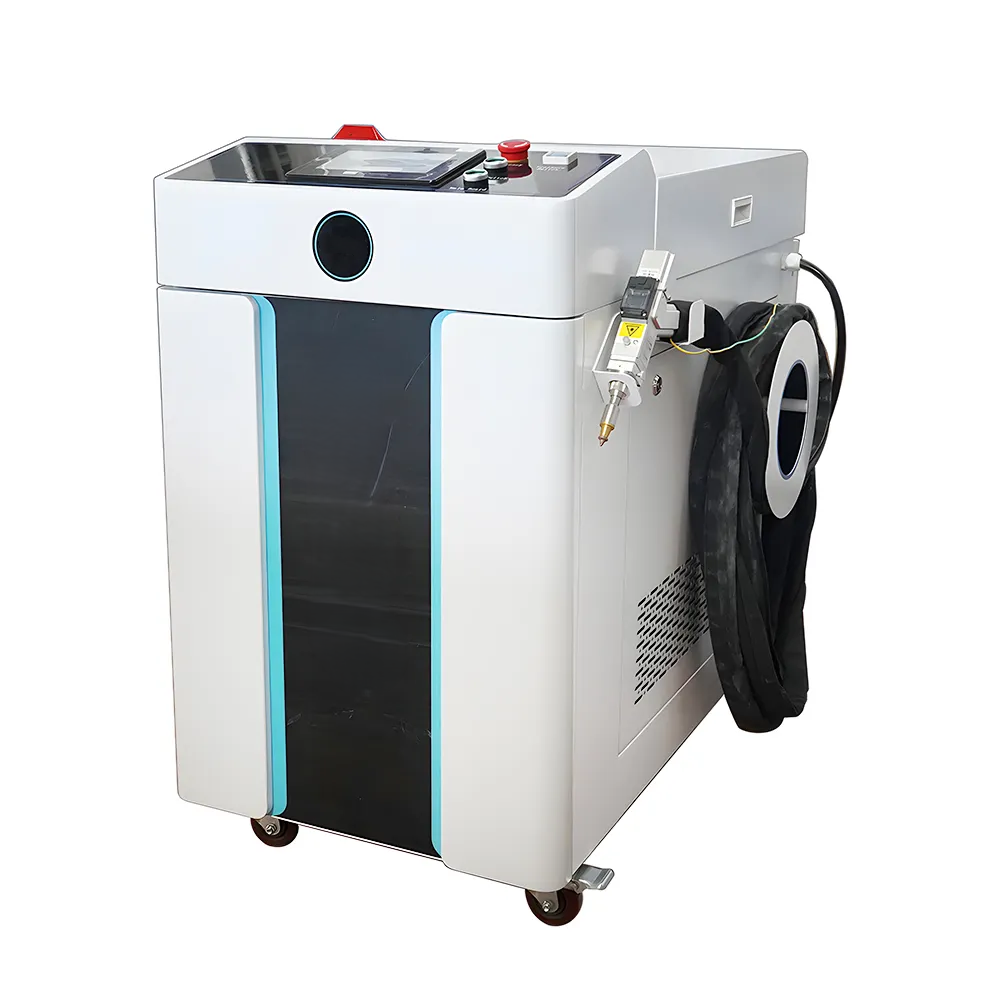
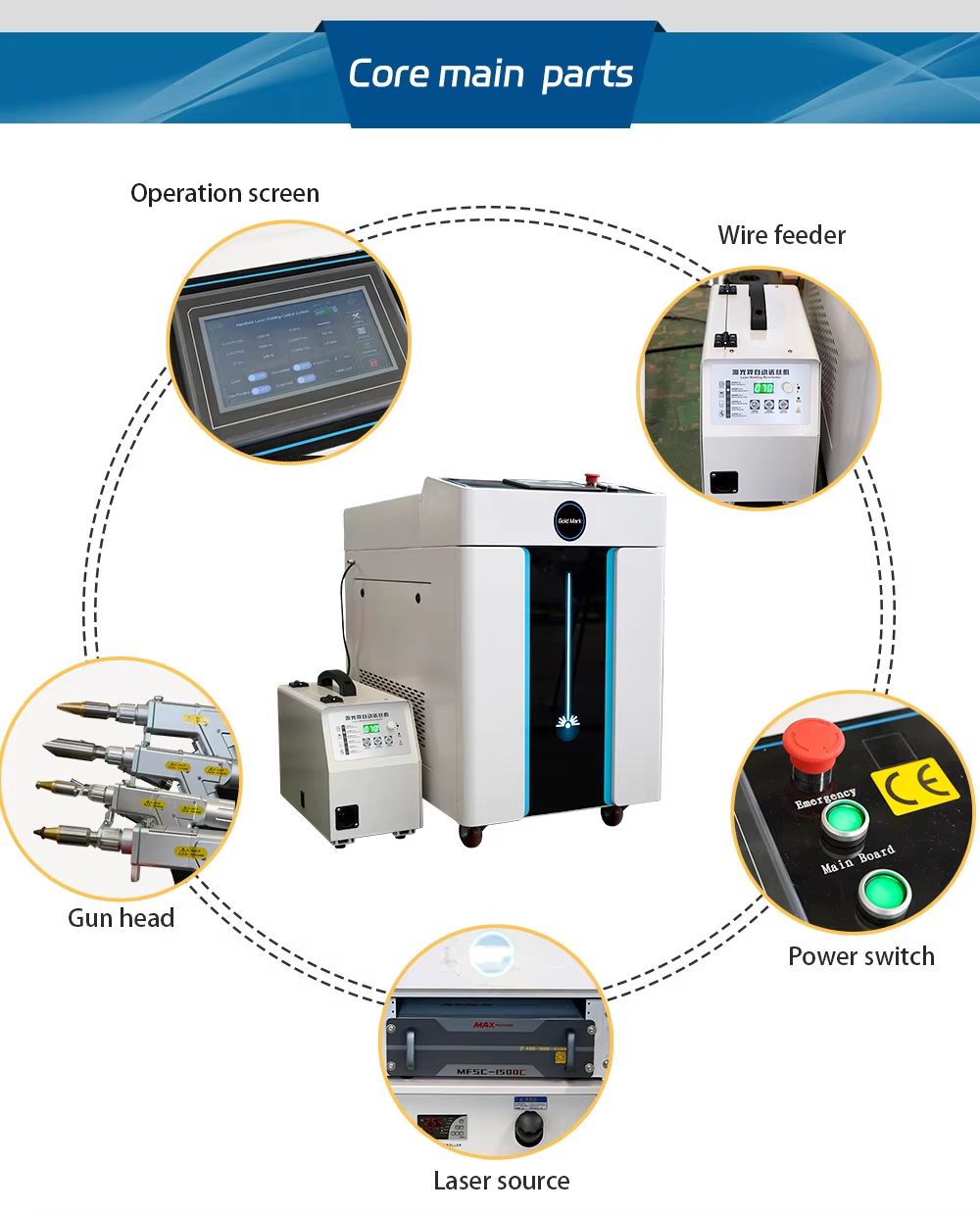
Industrial manufacturing environments demand reliable, high-performance laser systems capable of sustained operation under demanding conditions. Continuous laser technology has emerged as a critical solution for production facilities requiring uninterrupted output, precision material processing, and consistent quality across extended operational periods. Unlike pulsed laser alternatives, continuous laser systems deliver steady-state energy emission that proves essential for applications ranging from metal cleaning and surface preparation to welding, cutting, and coating removal in high-volume manufacturing settings.

Selecting the optimal continuous laser system for industrial applications requires careful evaluation of power output specifications, beam quality characteristics, thermal management capabilities, and operational longevity factors. Modern continuous wave fiber laser platforms have revolutionized industrial processing by offering superior wall-plug efficiency, reduced maintenance requirements, and exceptional beam stability compared to legacy CO2 and solid-state laser technologies. This comprehensive examination explores the defining characteristics of superior continuous laser systems, the critical performance parameters that distinguish industrial-grade equipment, and the practical considerations manufacturers must address when integrating these systems into production workflows.
Core Performance Characteristics Defining Industrial Continuous Laser Systems
Power Output Stability and Beam Quality Fundamentals
The foundation of any effective continuous laser system rests upon its ability to maintain consistent power output across extended operational cycles. Industrial-grade continuous laser platforms must demonstrate minimal power fluctuation, typically maintaining output stability within two percent variance over multi-hour production runs. This stability directly impacts process repeatability, ensuring that surface cleaning operations, welding penetration depths, and material removal rates remain uniform regardless of when components enter the production sequence. Power stability becomes particularly critical in automated manufacturing environments where process parameters cannot be adjusted for individual workpieces.
Beam quality, quantified through the M-squared parameter, determines the focusing capability and energy concentration achievable with continuous laser systems. Superior industrial continuous laser equipment typically exhibits M-squared values below 1.5, enabling tight focal spot sizes that maximize power density at the target surface. This characteristic proves essential for precision applications requiring controlled heat-affected zones, such as selective coating removal or fine-detail surface texturing. The combination of high power stability and excellent beam quality allows continuous laser systems to process diverse materials with predictable, controllable outcomes across varying production volumes.
Thermal Management Architecture and Cooling Efficiency
Continuous operation inherently generates substantial thermal loads that must be effectively dissipated to maintain system performance and component longevity. Leading continuous laser systems incorporate advanced cooling architectures featuring high-capacity water chillers, optimized heat exchanger designs, and intelligent thermal monitoring systems. These cooling solutions must remove heat at rates matching the laser's electrical input power, often handling thermal loads exceeding several kilowatts in high-power industrial configurations. Inadequate thermal management leads to beam quality degradation, output power drift, and accelerated component aging.
The thermal stability of continuous laser systems directly influences their suitability for demanding industrial environments. Robust cooling systems maintain critical optical components within narrow temperature ranges, typically within five degrees Celsius of target operating points, preventing thermal lensing effects that compromise beam characteristics. Advanced continuous laser platforms employ closed-loop temperature control with real-time adjustments based on ambient conditions and operational load, ensuring consistent performance across seasonal temperature variations and throughout daily production cycles. This thermal discipline translates directly to process stability and reduced downtime for temperature-related recalibration.
Electrical Efficiency and Operational Cost Considerations
Modern fiber-based continuous laser systems have achieved remarkable improvements in wall-plug efficiency, converting electrical input to optical output at rates exceeding thirty percent in many industrial configurations. This efficiency advantage translates to substantial operational cost reductions compared to older laser technologies, particularly in high-duty-cycle applications where continuous laser systems operate for extended periods daily. The reduced electrical consumption not only lowers energy costs but also minimizes cooling requirements, creating a compounding efficiency benefit that improves overall system economics.
Beyond direct energy consumption, the operational efficiency of continuous laser systems encompasses maintenance requirements, consumable costs, and system uptime characteristics. Superior industrial continuous laser platforms require minimal routine maintenance, often operating thousands of hours between service intervals without optical alignment adjustments or component replacements. This reliability stems from the solid-state architecture of fiber laser technology, which eliminates the gas replenishment, mirror alignment, and lamp replacement cycles associated with legacy laser systems. The cumulative effect of high electrical efficiency and low maintenance demands positions continuous laser technology as a cost-effective solution for manufacturers seeking to optimize their total cost of ownership.
Application-Specific Requirements for Continuous Laser Selection
Surface Preparation and Coating Removal Applications
Continuous laser systems excel in industrial surface preparation applications where controlled material removal and minimal substrate damage are paramount. For rust removal, paint stripping, and oxidation cleaning, continuous laser technology offers precise energy delivery that selectively ablates contaminants while preserving base metal integrity. The steady-state energy emission characteristic of continuous laser systems enables uniform cleaning rates across large surface areas, making them ideal for preparing components prior to welding, coating application, or quality inspection processes in automotive, aerospace, and heavy equipment manufacturing.
The effectiveness of continuous laser cleaning depends on matching laser parameters to specific contaminant characteristics and substrate materials. Power levels typically range from five hundred watts to several kilowatts depending on coating thickness, material composition, and required processing speeds. Continuous laser systems designed for cleaning applications often incorporate adjustable power output, variable focal lengths, and scanning pattern customization to accommodate diverse workpiece geometries and contamination types. This flexibility allows manufacturers to address multiple surface preparation tasks with a single continuous laser platform, improving equipment utilization and return on investment.
Welding and Joining Process Requirements
Welding applications impose stringent demands on continuous laser systems regarding power stability, beam quality, and process control responsiveness. Continuous wave laser welding enables deep penetration joints with narrow heat-affected zones, characteristics essential for joining thick-section materials or heat-sensitive alloys. The consistent energy delivery of continuous laser systems produces uniform weld bead geometry and predictable metallurgical properties, critical factors in structural applications where joint integrity and fatigue resistance determine component service life. Industrial continuous laser welding systems typically operate at power levels from one kilowatt to ten kilowatts or higher, depending on material thickness and production speed requirements.
Process monitoring and feedback control capabilities distinguish advanced continuous laser welding systems from basic platforms. Superior systems integrate real-time weld pool monitoring, seam tracking sensors, and adaptive power control that adjusts laser output based on joint gap variations and material property fluctuations. These intelligent features enable continuous laser welding systems to maintain consistent joint quality despite normal manufacturing variations in part fit-up and material composition. The combination of stable continuous laser output and sophisticated process control delivers the reliability and quality consistency required in automotive body assembly, aerospace structural fabrication, and precision medical device manufacturing.
Cutting and Material Processing Considerations
Continuous laser cutting systems serve specialized industrial applications where smooth edge quality, minimal dross formation, and controlled heat input are prioritized over maximum cutting speed. While pulsed lasers dominate high-speed thin-sheet cutting, continuous laser technology excels in thick-section cutting, tube processing, and materials requiring careful thermal management during cutting operations. The steady-state energy delivery characteristic of continuous laser systems produces cleaner cut edges with reduced micro-cracking and heat-affected zone dimensions compared to pulsed alternatives in many material-thickness combinations.
Material-specific process windows define the suitability of continuous laser systems for cutting applications. Stainless steel, aluminum alloys, and titanium materials respond favorably to continuous laser cutting when appropriate assist gas selection and focal position optimization accompany proper power level selection. Industrial continuous laser cutting systems typically incorporate multi-axis motion control, capacitive height sensing, and nozzle collision detection to maintain consistent standoff distances and cutting parameters across complex part geometries. These features enable continuous laser platforms to deliver the precision and repeatability essential in aerospace component fabrication, industrial equipment manufacturing, and custom metal fabrication environments.
Technical Specifications and Selection Criteria
Power Level Determination and Scalability
Selecting appropriate power levels for continuous laser systems requires thorough analysis of application requirements, material characteristics, and production throughput targets. For surface cleaning applications, continuous laser systems in the one-kilowatt to two-kilowatt range typically provide optimal balance between processing speed and equipment cost for steel and aluminum components. Higher power continuous laser platforms, ranging from three kilowatts to six kilowatts, become necessary for thick coating removal, heavy rust elimination, or high-speed production requirements. Understanding the relationship between laser power, processing speed, and quality outcomes guides manufacturers toward systems that meet operational needs without overinvestment in unnecessary capacity.
Scalability considerations influence continuous laser system selection when manufacturers anticipate expanding applications or increasing production volumes. Modular continuous laser architectures allow power upgrades through additional pump diode modules or parallel laser source configurations, protecting initial equipment investments while accommodating future growth. Some continuous laser platforms offer field-upgradeable power capabilities, enabling manufacturers to increase system output as production demands evolve without replacing entire laser sources. This scalability approach reduces capital expenditure risks and aligns equipment capabilities with actual production requirements rather than speculative future needs.
Beam Delivery and Articulation Flexibility
The beam delivery architecture of continuous laser systems significantly impacts their practical utility in diverse industrial applications. Fiber-delivered continuous laser systems offer exceptional flexibility, routing laser energy through armored optical cables to reach confined spaces, robotic end-effectors, or multiple processing stations from a single laser source. This delivery method preserves beam quality across extended cable lengths, typically maintaining near-diffraction-limited beam characteristics through fiber runs exceeding fifty meters. Fiber delivery also simplifies system integration, eliminating the complex mirror-based beam paths and alignment maintenance required by rigid beam delivery architectures.
Processing head design and articulation capabilities determine how effectively continuous laser systems address complex workpiece geometries and varied production requirements. Advanced continuous laser processing heads incorporate motorized focal length adjustment, programmable spot size control, and integrated cross-jet air knives that protect optical components from process contamination. For robotic applications, lightweight processing heads minimize inertial loads on robot arms, enabling faster motion speeds and more responsive path following. The combination of flexible fiber delivery and sophisticated processing heads allows continuous laser systems to tackle diverse applications ranging from flat-sheet processing to three-dimensional component cleaning and complex-geometry welding operations.
Control System Integration and Process Monitoring
Modern continuous laser systems incorporate comprehensive control architectures that interface seamlessly with factory automation systems, enabling coordinated operation within integrated manufacturing cells. Industrial communication protocols including EtherCAT, PROFINET, and Ethernet/IP allow continuous laser systems to exchange real-time data with motion controllers, robot systems, and manufacturing execution software. This connectivity enables synchronized laser triggering, coordinated multi-axis motion, and adaptive process parameter adjustment based on upstream inspection data or downstream quality feedback, maximizing the effectiveness of continuous laser integration in automated production environments.
Process monitoring capabilities embedded within advanced continuous laser systems provide critical visibility into operational performance and quality outcomes. Real-time monitoring of laser output power, beam quality metrics, and thermal system status enables predictive maintenance scheduling and early detection of performance degradation. Some continuous laser platforms incorporate application-specific process monitoring, such as weld pool imaging for joining applications or surface quality assessment for cleaning operations. These monitoring features generate data streams that support statistical process control, quality traceability, and continuous improvement initiatives essential in regulated industries and quality-focused manufacturing environments.
Operational Reliability and Maintenance Considerations
Component Longevity and Mean Time Between Failures
Industrial continuous laser systems must demonstrate exceptional reliability to justify their integration into production-critical applications. Leading fiber-based continuous laser platforms achieve mean time between failures exceeding twenty thousand operational hours, significantly surpassing the reliability characteristics of legacy laser technologies. This reliability stems from the solid-state architecture of fiber lasers, which eliminates failure-prone mechanical components, consumable elements, and alignment-sensitive optical assemblies. The monolithic construction of continuous laser fiber delivery systems further enhances reliability by eliminating the numerous optical interfaces and adjustment mechanisms present in traditional beam delivery architectures.
Component-level design choices determine the long-term reliability of continuous laser systems under demanding industrial conditions. High-quality pump diodes, robust fiber components, and conservative thermal management ensure that continuous laser systems maintain performance specifications throughout extended service lives. Manufacturers should evaluate continuous laser platforms based on documented field reliability data, warranty coverage terms, and the proven track record of suppliers in similar industrial applications. Understanding the failure modes and maintenance requirements of continuous laser systems enables realistic total cost of ownership projections and appropriate preventive maintenance scheduling.
Maintenance Requirements and Serviceability Design
The maintenance burden of continuous laser systems directly impacts their operational viability in industrial settings where unplanned downtime translates to production losses and delivery delays. Superior continuous laser designs minimize routine maintenance requirements through sealed optical paths, maintenance-free pump diode modules, and self-monitoring systems that alert operators to potential issues before failures occur. Typical maintenance intervals for industrial continuous laser systems extend to several thousand operational hours, with routine activities limited to cooling system filter replacement, protective window inspection, and basic cleanliness verification of beam delivery components.
Serviceability features distinguish well-engineered continuous laser systems from designs requiring extensive technical expertise for routine maintenance. Modular construction with field-replaceable components enables rapid restoration of functionality when issues arise, minimizing production disruption. Comprehensive diagnostic systems within continuous laser platforms guide technicians through troubleshooting procedures, identifying failed components and recommending corrective actions. Remote monitoring capabilities allow laser manufacturers to provide proactive technical support, often resolving issues through parameter adjustments or software updates without on-site service visits. These serviceability characteristics reduce the total cost of continuous laser ownership while maximizing equipment uptime in production environments.
Environmental Robustness and Installation Requirements
Industrial manufacturing environments present challenging conditions that continuous laser systems must withstand while maintaining performance specifications. Temperature fluctuations, airborne contaminants, vibration exposure, and electrical noise characterize many factory settings, requiring continuous laser designs with appropriate environmental protection. Industrial-grade continuous laser systems incorporate sealed enclosures with IP54 or higher ingress protection ratings, vibration-isolated mounting systems, and electromagnetic shielding that ensures reliable operation in electrically noisy environments typical of welding shops and heavy fabrication facilities.
Installation requirements for continuous laser systems influence their practical integration into existing manufacturing facilities. Space-efficient designs with compact laser source footprints simplify installation in crowded production areas where floor space commands premium value. Utility requirements including electrical service, cooling water supply, and compressed air availability must align with facility capabilities to avoid costly infrastructure modifications. Some continuous laser systems offer air-cooled configurations that eliminate chilled water requirements, expanding installation options in facilities lacking appropriate cooling infrastructure. Understanding the environmental tolerances and installation requirements of continuous laser platforms ensures successful integration and long-term operational success.
FAQ
What power level continuous laser system is appropriate for industrial rust removal applications?
For typical industrial rust removal applications on steel components, continuous laser systems in the one thousand to two thousand watt power range provide effective cleaning performance with reasonable processing speeds. This power level enables rust removal rates of several square meters per hour on moderately corroded surfaces, making them suitable for maintenance operations, component refurbishment, and pre-weld surface preparation. Heavier rust accumulations or faster production requirements may necessitate higher power continuous laser systems up to three thousand watts, while lighter surface oxidation can be addressed effectively with lower power platforms in the five hundred to one thousand watt range.
How does continuous laser technology compare to pulsed lasers for industrial cleaning applications?
Continuous laser systems deliver steady-state energy that excels in applications requiring uniform heating and gradual material removal, making them particularly effective for thick coating removal and heavy rust elimination where thermal accumulation aids the cleaning process. Pulsed lasers concentrate energy into short, high-intensity bursts that minimize heat transfer to substrates, making them preferable for heat-sensitive materials or when preserving underlying surface treatments. For general industrial cleaning of robust steel and aluminum components, continuous laser systems often provide cost-effective performance with simpler system architectures and lower equipment costs compared to pulsed alternatives, though application-specific testing should guide final technology selection.
What maintenance activities do industrial continuous laser systems require?
Industrial continuous laser systems require minimal routine maintenance, typically limited to quarterly cooling system filter replacement, periodic inspection and cleaning of protective windows in the processing head, and annual verification of beam quality and output power calibration. Modern fiber-based continuous laser platforms eliminate the mirror alignment, gas refilling, and lamp replacement procedures associated with legacy laser technologies, significantly reducing maintenance burden and associated downtime. Most continuous laser manufacturers recommend annual preventive maintenance inspections performed by factory-trained technicians to verify system performance, update software, and identify potential issues before they impact production operations.
Can continuous laser systems process multiple materials and applications with the same equipment?
Continuous laser systems offer excellent versatility across multiple materials and applications when equipped with appropriate parameter control and beam delivery flexibility. A single continuous laser platform can typically address cleaning, welding, and cutting applications on various materials by adjusting power levels, focal positions, and process parameters through the control system. This multi-application capability maximizes equipment utilization and return on investment, particularly valuable for job shops and manufacturers processing diverse product mixes. However, optimal performance in each application may require application-specific processing heads, fixtures, or accessories, and manufacturers should verify that candidate continuous laser systems include the parameter ranges and control flexibility needed for their intended application portfolio.
Table of Contents
- Core Performance Characteristics Defining Industrial Continuous Laser Systems
- Application-Specific Requirements for Continuous Laser Selection
- Technical Specifications and Selection Criteria
- Operational Reliability and Maintenance Considerations
-
FAQ
- What power level continuous laser system is appropriate for industrial rust removal applications?
- How does continuous laser technology compare to pulsed lasers for industrial cleaning applications?
- What maintenance activities do industrial continuous laser systems require?
- Can continuous laser systems process multiple materials and applications with the same equipment?
EN
AR
FR
DE
JA
KO
RU
ES