 EN
EN
 AR
AR
 FR
FR
 DE
DE
 JA
JA
 KO
KO
 RU
RU
 ES
ES


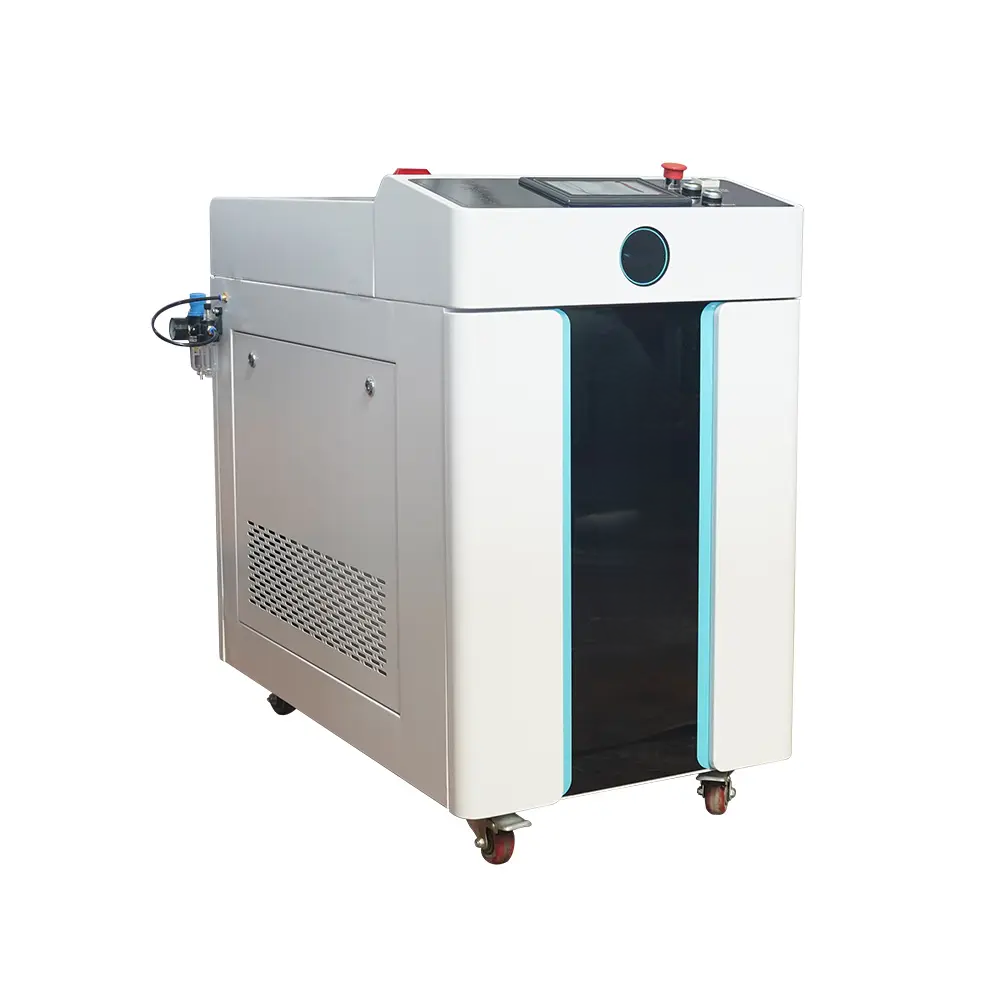
Understanding the fundamental differences between continuous laser systems and pulsed laser technology is essential for industrial professionals seeking optimal solutions for material processing, welding, cutting, and surface treatment applications. While both technologies harness concentrated light energy to achieve precise material manipulation, their operational characteristics, energy delivery mechanisms, and suitability for specific manufacturing tasks differ substantially. The continuous laser operates by emitting a steady, uninterrupted beam of coherent light, maintaining constant power output throughout operation, whereas pulsed lasers deliver energy in discrete bursts with controlled intervals between each pulse. This fundamental distinction in energy delivery creates profound implications for thermal management, material interaction depth, processing speed, and the quality of final results across diverse industrial applications.
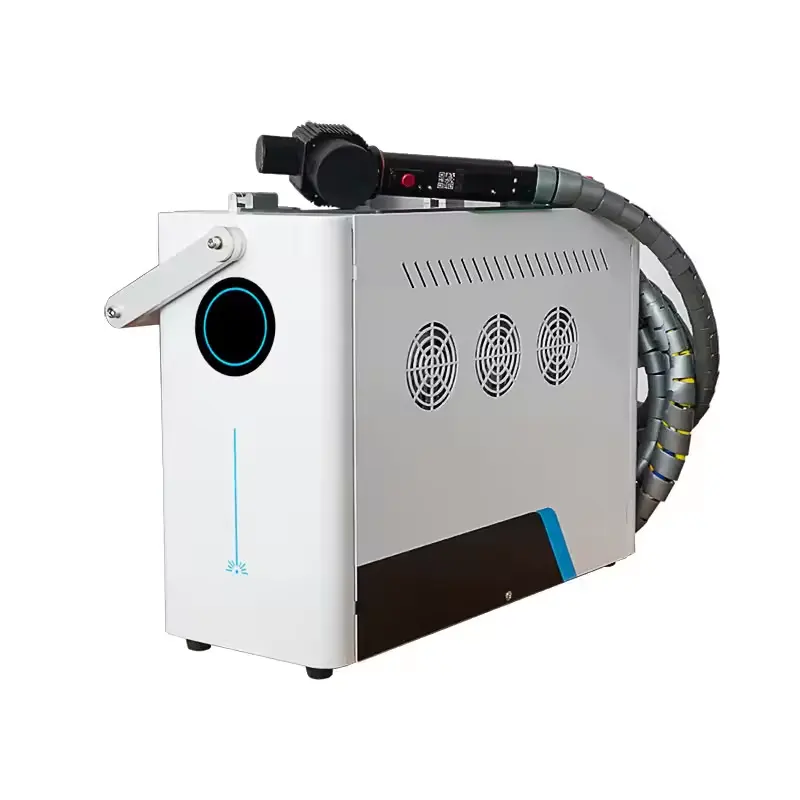
Selecting between continuous laser technology and pulsed laser systems requires comprehensive evaluation of your specific manufacturing requirements, material characteristics, desired processing outcomes, and operational constraints. The continuous laser excels in applications demanding sustained heat input and deep penetration, such as thick metal cutting and high-speed welding operations where consistent energy flow ensures uniform results. Conversely, pulsed laser systems provide superior control over heat-affected zones, making them ideal for precision work on heat-sensitive materials, intricate surface cleaning, and applications where minimizing thermal distortion is critical. This comparison explores the technical architecture, operational principles, application suitability, performance characteristics, and economic considerations that distinguish these two laser technologies, equipping decision-makers with the knowledge necessary to make informed equipment investments aligned with production objectives.
Operational Principles and Energy Delivery Mechanisms
Continuous Wave Laser Operation Fundamentals
The continuous laser generates a constant beam of electromagnetic radiation without interruption during active operation, maintaining steady power output measured in watts that remains consistent throughout the processing cycle. This continuous wave emission results from sustained population inversion within the laser medium, where atoms remain in excited states and continuously release photons through stimulated emission. The uninterrupted nature of continuous laser systems creates a steady thermal profile in the target material, allowing heat to accumulate progressively and penetrate deeply into substrates. This characteristic makes continuous laser technology particularly effective for applications requiring substantial material removal, deep fusion welding, or processes where maintaining elevated temperatures throughout extended processing periods enhances outcomes.
Within a continuous laser system, the optical resonator maintains constant feedback between mirrors, allowing photons to traverse the gain medium repeatedly while amplifying coherent light continuously. The power stability of continuous laser beams depends on precise control of pump energy, thermal management within the laser cavity, and optical component quality that sustains resonance conditions. Modern continuous laser systems incorporate sophisticated monitoring and feedback mechanisms that detect power fluctuations and adjust pump sources in real-time to maintain output consistency. This operational stability translates to predictable material interaction, consistent processing speeds, and repeatable results across production runs, making continuous laser equipment suitable for high-volume manufacturing environments where process reliability directly impacts throughput and product quality.
Pulsed Laser Energy Delivery Architecture
Pulsed laser systems deliver energy in discrete packets separated by controlled time intervals, with each pulse containing concentrated energy released over durations ranging from milliseconds to femtoseconds depending on system design. This intermittent energy delivery allows the laser medium to build up population inversion between pulses, then release accumulated energy rapidly during each emission cycle. The peak power achieved during individual pulses often exceeds the average power of the system by orders of magnitude, enabling pulsed lasers to achieve material effects impossible with continuous laser systems of equivalent average power. Between pulses, the target material experiences cooling periods that limit heat accumulation and reduce the thermal impact on surrounding areas, providing superior control over heat-affected zones compared to continuous laser processing.
The temporal characteristics of pulsed laser systems are defined by parameters including pulse duration, pulse energy, repetition rate, and duty cycle, each influencing material interaction mechanisms and processing outcomes. Pulse duration determines the timescale of energy deposition, affecting whether material removal occurs through thermal vaporization, plasma formation, or photomechanical effects. Repetition rate controls how frequently pulses strike the material, influencing average power delivery and thermal accumulation patterns. Pulse energy represents the total energy contained within each individual pulse, determining the intensity of material interaction during each emission event. These parameters can be adjusted independently in many pulsed laser systems, providing operational flexibility that allows optimization for diverse materials and processing objectives without requiring equipment replacement.
Thermal Management and Material Interaction Differences
The continuous laser creates sustained thermal gradients within processed materials, with heat continuously flowing from the interaction zone into surrounding substrate regions throughout the processing duration. This continuous heat input promotes deep thermal penetration, making continuous laser systems effective for applications like thick section welding where fusion must extend through substantial material thickness. However, the persistent heat accumulation also enlarges heat-affected zones, potentially causing thermal distortion, microstructural changes in adjacent areas, or damage to heat-sensitive components near the processing region. Managing these thermal effects requires careful control of processing speed, beam power, and sometimes auxiliary cooling methods to prevent excessive heating beyond the intended interaction zone.
Pulsed laser technology fundamentally alters thermal dynamics by introducing cooling intervals between energy delivery events, allowing heat to dissipate partially before subsequent pulses arrive. This intermittent heating pattern confines thermal effects more tightly to the immediate interaction zone, reducing heat-affected zone dimensions and minimizing thermal stress in processed components. The peak power intensity during pulses enables material ablation, vaporization, or melting at threshold levels that would require excessive average power from a continuous laser, potentially causing unacceptable thermal damage to surrounding areas. For materials sensitive to heat accumulation, coatings on temperature-sensitive substrates, or precision applications where dimensional accuracy depends on minimal thermal distortion, pulsed laser systems provide thermal management advantages that continuous laser equipment cannot match regardless of operational parameter adjustments.
Application Suitability and Industrial Use Cases
Cutting Operations Across Material Types
For metal cutting applications involving thick sections, the continuous laser provides advantages in processing speed and edge quality by maintaining consistent melt pool conditions throughout the cutting path. The sustained energy delivery from continuous laser systems generates stable kerf geometry and smooth cut surfaces when paired with appropriate assist gas flows that remove molten material efficiently. High-power continuous laser cutters excel in production environments processing steel, stainless steel, and aluminum plates where throughput demands justify equipment investments and material thicknesses exceed several millimeters. The continuous energy flow enables faster traverse speeds compared to pulsed systems of equivalent average power when cutting thick materials, reducing per-part processing time and increasing production capacity.
Conversely, pulsed laser cutting demonstrates superiority when processing thin materials, reflective metals like copper or brass, or applications requiring minimal heat-affected zones near cut edges. The peak power pulses overcome the high reflectivity of certain metals more effectively than continuous laser beams, improving energy coupling efficiency and cutting reliability. For precision cutting of sheet metals, electronics components, or medical device parts where edge quality and minimal thermal distortion are paramount, pulsed laser technology delivers cleaner cuts with narrower heat-affected zones. The controlled energy delivery prevents excessive heating that could warp thin sections or alter material properties near cutting paths, maintaining component dimensional accuracy and preserving substrate characteristics adjacent to processed areas.
Welding Applications and Joint Quality Considerations
The continuous laser dominates high-speed welding operations where deep penetration and consistent fusion zones are required to join thick metal components reliably. Automotive manufacturing, shipbuilding, and heavy equipment production frequently employ continuous laser welding systems that create strong metallurgical bonds while maintaining production rates compatible with automated assembly lines. The sustained energy input from a continuous laser generates stable keyhole welding conditions, where vaporization pressure creates a vapor cavity allowing beam energy to penetrate deeply into joint interfaces. This keyhole mechanism enables single-pass welding of substantial thicknesses that would require multiple passes with other joining technologies, reducing cycle times and improving weld consistency across production volumes.
Pulsed laser welding systems excel in precision joining applications involving dissimilar materials, thin sections, or components where minimizing distortion and preserving base material properties near weld zones is critical. Electronics manufacturing, jewelry fabrication, and medical device assembly leverage pulsed laser welding to create localized fusion bonds without heating surrounding areas excessively. The controlled energy pulses enable spot welding, seam welding with precise heat input control, and joining of materials with significantly different melting points or thermal conductivities. For applications involving heat-sensitive components, assemblies with tight tolerances, or joining operations where subsequent processing steps cannot accommodate thermal distortion, pulsed laser welding provides thermal management capabilities that continuous laser systems cannot replicate regardless of power modulation attempts.
Surface Treatment and Material Removal Processes
Surface cleaning applications, including rust removal, paint stripping, and contamination elimination, increasingly rely on pulsed laser technology due to its ability to selectively ablate surface layers without damaging underlying substrates. The high peak power pulses vaporize contaminants, oxides, and coatings through rapid heating and plasma formation while the short pulse durations and cooling intervals prevent heat from conducting deeply into base materials. This selective removal capability makes pulsed laser cleaning ideal for heritage restoration, pre-weld surface preparation, and industrial maintenance where preserving substrate integrity is essential. The process generates minimal waste compared to chemical or abrasive methods, offering environmental advantages alongside precision material removal capabilities.
Surface hardening, annealing, and thermal treatment applications sometimes utilize continuous laser systems when uniform heating of extended surface areas is required to achieve desired metallurgical transformations. The sustained energy delivery from continuous laser beams can raise surface temperatures to transformation ranges while controlling heating rates and thermal profiles through traverse speed and power adjustments. However, for applications requiring surface texturing, micro-structuring, or localized property modification without affecting bulk material characteristics, pulsed laser systems provide superior control through precise energy deposition and minimal thermal diffusion beyond the intended treatment zone.
Performance Characteristics and Operational Parameters
Power Output Specifications and Energy Efficiency
The continuous laser delivers constant power output typically ranging from hundreds of watts to tens of kilowatts depending on system design and application requirements. This average power represents the sustained energy delivery rate that determines processing speeds, penetration depths, and material removal rates during operations. Energy efficiency in continuous laser systems depends on the laser medium type, with fiber-based continuous laser designs achieving wall-plug efficiencies exceeding thirty percent, significantly outperforming older CO2 or solid-state rod laser architectures. Higher efficiency translates to reduced operating costs through lower electrical consumption and decreased cooling requirements, making modern continuous laser equipment economically attractive for high-volume production environments where energy costs constitute significant operational expenses.
Pulsed laser systems are characterized by average power, peak power, pulse energy, and repetition rate specifications that collectively define processing capabilities. While average power may appear modest compared to high-power continuous laser systems, the peak power achieved during individual pulses can reach megawatts or even gigawatts for ultrashort pulse systems, enabling material interaction mechanisms unavailable to continuous laser equipment. The average power determines overall processing throughput and thermal loading, while peak power governs material ablation thresholds and plasma formation characteristics. Energy efficiency varies with pulse duration and repetition rate, with some pulsed laser architectures achieving excellent efficiency at specific operating points while showing reduced performance at parameter extremes. Understanding these specifications enables proper system selection based on application requirements rather than simplistic power comparisons that ignore temporal energy delivery characteristics.
Beam Quality and Focusability Factors
Beam quality, quantified by the M-squared parameter, determines how tightly laser energy can be focused and how beam characteristics evolve during propagation from the laser source to the workpiece. High-quality continuous laser beams with M-squared values near unity can be focused to extremely small spot sizes, concentrating energy densities that enable precise cutting, drilling, and welding operations. Modern fiber-based continuous laser systems routinely achieve excellent beam quality that maintains tight focus over substantial working distances, providing operational flexibility for robotic integration and multi-axis processing systems. The focusability of continuous laser beams directly influences processing precision, kerf width in cutting operations, and weld bead dimensions, making beam quality a critical specification for applications demanding fine feature resolution.
Pulsed laser beam quality similarly affects focusability and processing precision, with additional considerations related to temporal pulse shaping and spatial beam profile evolution during pulse propagation. Some pulsed laser architectures sacrifice beam quality for higher pulse energies or shorter pulse durations, trading focusability for other performance attributes. Applications requiring both high peak power and excellent beam quality, such as precision drilling or micro-machining operations, demand carefully engineered pulsed laser systems that optimize multiple parameters simultaneously. The interaction between beam quality and pulse temporal characteristics influences material coupling efficiency, ablation precision, and the minimum feature sizes achievable during processing operations.
Operational Stability and Maintenance Requirements
The continuous laser systems designed for industrial production environments incorporate extensive monitoring and control systems that maintain output stability across extended operating periods, ensuring consistent processing results throughout production shifts. Temperature stabilization, pump source regulation, and optical component alignment mechanisms work continuously to counteract environmental variations and component aging effects that could degrade beam quality or power output. Maintenance requirements vary with laser architecture, but modern fiber-based continuous laser systems offer exceptional reliability with maintenance intervals measured in thousands of operating hours. The sealed optical path design of fiber lasers eliminates contamination issues that plague older laser types, while solid-state pump diodes provide longevity exceeding traditional lamp-based excitation sources by orders of magnitude.
Pulsed laser maintenance considerations depend heavily on pulse duration regime and system architecture. Nanosecond and millisecond pulsed systems using lamp or diode pumping may require periodic flashlamp replacement and optical component cleaning to maintain performance specifications. Ultrashort pulse systems employing complex amplification stages and nonlinear optical elements demand more sophisticated maintenance protocols including alignment verification and optical component inspection. However, reliability improvements in modern pulsed laser designs have substantially reduced maintenance burdens compared to earlier generation equipment. Both continuous laser and pulsed laser technologies benefit from predictive maintenance approaches that monitor performance indicators and schedule interventions before failures occur, maximizing equipment uptime and production continuity.
Economic Factors and Investment Considerations
Initial Capital Investment and System Costs
Capital costs for continuous laser systems span a broad range depending on power output, beam quality specifications, and integrated automation features. Entry-level kilowatt-class continuous laser cutting or welding systems may represent investments of tens of thousands of dollars, while high-power multi-kilowatt systems with advanced beam delivery and process monitoring capabilities can exceed several hundred thousand dollars. The cost per watt generally decreases with increasing power levels, making high-power continuous laser equipment relatively cost-effective for applications that fully utilize available output. System integration costs including robotic manipulation, fixturing, safety enclosures, and process control interfaces often equal or exceed the laser source cost itself, requiring comprehensive budgeting that accounts for complete production cell implementation rather than isolated equipment acquisition.
Pulsed laser system pricing varies even more dramatically than continuous laser costs due to the wide range of pulse duration regimes, pulse energies, and repetition rates available across different system architectures. Millisecond pulsed laser systems for marking or basic welding applications may cost less than many continuous laser systems of similar average power, while femtosecond ultrashort pulse systems capable of precision micro-machining can require investments approaching or exceeding a million dollars. The specialized optical components, complex amplification chains, and sophisticated control electronics required for short-pulse high-peak-power operation contribute to elevated costs for advanced pulsed laser systems. When evaluating investment requirements, decision-makers must consider not only initial capital costs but also installation expenses, operator training requirements, and facility modifications necessary to accommodate laser safety and environmental control requirements.
Operating Cost Analysis and Production Economics
The continuous laser operating costs primarily comprise electrical consumption, cooling system operation, periodic maintenance, and eventual replacement of wear components like protective windows or nozzles. The high wall-plug efficiency of modern fiber-based continuous laser systems minimizes electrical costs compared to legacy laser technologies, with kilowatt-class systems typically consuming two to three kilowatts of electrical power per kilowatt of optical output. Cooling requirements scale with laser power and efficiency, potentially requiring chilled water systems for high-power installations that add incremental operating costs. Assist gas consumption for cutting or welding operations constitutes a significant variable cost that depends on processing parameters, material types, and duty cycles. Comprehensive cost modeling must account for all consumables, utilities, and maintenance activities to accurately project per-part processing costs across expected production volumes.
Pulsed laser operating costs similarly depend on electrical consumption, cooling requirements, and maintenance activities, with additional considerations related to pulse generation mechanisms. Some pulsed laser architectures employ flashlamps with finite lifetimes measured in millions of pulses, creating predictable replacement costs that scale with production volumes. Solid-state pulsed laser systems using diode pumping eliminate flashlamp replacement but may require periodic cleaning of optical components exposed to ablation debris or plasma byproducts. The lower average power levels typical of many pulsed laser applications translate to reduced electrical and cooling costs compared to high-power continuous laser systems, potentially offering economic advantages for applications not requiring sustained high-power delivery. Life-cycle cost analysis comparing continuous laser and pulsed laser alternatives should evaluate initial investment, operating expenses, maintenance requirements, and expected equipment service life to determine total cost of ownership over relevant planning horizons.
Productivity and Return on Investment Metrics
Productivity advantages of continuous laser systems manifest primarily through higher processing speeds enabled by sustained power delivery and deep material penetration capabilities. For high-volume cutting or welding operations where cycle time directly limits production capacity, the continuous laser can process parts substantially faster than lower-average-power pulsed alternatives, improving throughput and reducing per-part labor costs. The ability to maintain consistent processing conditions throughout extended production runs without parameter adjustments or quality variations contributes to manufacturing efficiency and waste reduction. When production volumes justify capital investment in high-power continuous laser equipment, the combination of speed, reliability, and operational simplicity often generates attractive return on investment timelines measured in months or a few years.
Pulsed laser productivity benefits emerge from precision capabilities that reduce or eliminate secondary processing operations, minimize material waste through superior process control, and enable processing of materials or configurations impossible with continuous laser technology. For applications involving high-value components, complex geometries, or demanding quality specifications, the precision and thermal management capabilities of pulsed laser systems may reduce defect rates, eliminate costly rework, and improve yields sufficiently to justify equipment investment despite potentially slower cycle times. The versatility of adjustable pulse parameters allows single pulsed laser systems to address diverse processing tasks that might otherwise require multiple specialized machines, improving capital utilization and operational flexibility. Return on investment analysis must consider not only direct processing time comparisons but also quality improvements, yield enhancements, and operational flexibility that contribute to overall manufacturing efficiency and profitability.
Selection Criteria and Decision Framework
Material Compatibility and Processing Requirements
Material characteristics fundamentally influence whether continuous laser or pulsed laser technology better suits specific applications. Reflective metals like copper, brass, and aluminum present challenges for traditional continuous laser systems using longer wavelengths, as high reflectivity reduces energy coupling efficiency and creates safety concerns from reflected beams. Pulsed laser systems overcome reflectivity through peak power intensities that rapidly initiate plasma formation, improving absorption and enabling reliable processing. Materials with low thermal conductivity respond well to continuous laser processing since heat remains localized near the interaction zone naturally, while highly conductive materials may require pulsed laser approaches to achieve necessary energy densities before heat dissipates. Material thickness, thermal properties, melting temperature, and sensitivity to heat-affected zones all inform technology selection decisions.
Processing requirements including penetration depth, feature resolution, surface quality specifications, and thermal distortion tolerances guide technology choice alongside material considerations. Applications demanding deep penetration through thick sections favor continuous laser systems that sustain energy delivery throughout material thickness. Precision operations requiring minimal heat-affected zones, fine feature resolution, or processing near heat-sensitive components necessitate pulsed laser approaches that confine thermal effects tightly. Surface finishing requirements may dictate technology selection when continuous laser processing produces unacceptable heat tinting or surface roughness that pulsed laser ablation can avoid. Understanding how specific material and processing requirement combinations influence outcomes with each technology enables informed decisions aligned with quality objectives and production standards.
Production Volume and Operational Flexibility Needs
Production volume expectations significantly impact technology selection and economic justification for continuous laser versus pulsed laser investment. High-volume manufacturing environments benefit from the speed and consistency of continuous laser processing when applications align with technology strengths, as throughput maximization and per-part cost minimization become paramount objectives. The operational simplicity and process stability of continuous laser systems suit production scenarios where part variety is limited and process optimization can be thoroughly developed for specific configurations. Conversely, pulsed laser operational flexibility through adjustable pulse parameters supports job shop or contract manufacturing environments where frequent changeovers between different materials, thicknesses, and processing requirements demand adaptable equipment capabilities.
Flexibility requirements extend beyond parameter adjustability to include physical integration constraints, automation compatibility, and future capability expansion potential. Continuous laser systems with fiber beam delivery offer exceptional integration flexibility, allowing laser sources to be remotely located from processing stations with beam delivery through flexible cables spanning substantial distances. This architecture simplifies robotic integration and enables multiple-station time-sharing configurations that maximize capital utilization. Pulsed laser systems with specialized optical requirements may impose greater integration constraints but provide processing capabilities unavailable from continuous laser equipment regardless of integration complexity. Future-proofing considerations should evaluate whether anticipated product evolution, material changes, or process improvements might require capabilities beyond initially specified requirements, informing decisions between specialized optimized equipment and more versatile adaptable systems.
Technical Support and Operator Skill Requirements
The continuous laser operational parameter space is generally more constrained than pulsed laser systems, simplifying operator training and reducing opportunities for inappropriate parameter selection that damages workpieces or equipment. Process development for continuous laser applications often follows established guidelines relating power, speed, and focal position to material type and thickness, enabling relatively quick optimization. However, troubleshooting issues like inconsistent cut quality or weld defects still requires understanding of laser-material interaction physics and systematic diagnostic approaches. Organizations implementing continuous laser technology should ensure access to technical support from equipment suppliers or develop internal expertise capable of addressing operational issues and optimizing processes for new applications as production requirements evolve.
Pulsed laser systems with extensive parameter adjustability demand greater operator sophistication and process development expertise to fully exploit capabilities. The relationships between pulse duration, repetition rate, pulse energy, and processing outcomes are complex and often non-intuitive, requiring systematic experimentation or simulation to identify optimal parameter combinations. Advanced pulsed laser applications involving ultrashort pulses or specialized material interactions may necessitate operators with technical backgrounds in physics or materials science who understand the underlying mechanisms governing process outcomes. Equipment suppliers providing comprehensive training, detailed application guidelines, and responsive technical support significantly reduce implementation barriers and accelerate time to productive operation. Organizations considering pulsed laser adoption should evaluate internal technical capabilities and available external support resources when assessing implementation feasibility and risk.
FAQ
What is the main difference between continuous laser and pulsed laser operation?
The fundamental difference lies in energy delivery timing: a continuous laser emits a steady, uninterrupted beam maintaining constant power output throughout operation, while a pulsed laser delivers energy in discrete bursts separated by controlled time intervals. This distinction creates different thermal management characteristics, with continuous laser systems providing sustained heat input suitable for deep penetration and high-speed processing, whereas pulsed lasers offer superior control over heat-affected zones through intermittent energy delivery that allows cooling between pulses. The choice between continuous laser and pulsed laser technologies depends primarily on your specific application requirements, material characteristics, and desired processing outcomes.
Which laser type is better for thick metal cutting applications?
For cutting thick metal sections, continuous laser systems generally provide superior performance through sustained energy delivery that maintains stable melt pools and enables faster traverse speeds compared to pulsed alternatives of equivalent average power. The uninterrupted beam from a continuous laser generates consistent kerf geometry and smooth cut edges when processing steel, stainless steel, and aluminum plates exceeding several millimeters thickness. High-power continuous laser cutters dominate production environments where throughput demands and material thicknesses justify equipment investment, offering processing speeds and edge quality that maximize productivity for thick section cutting operations.
Can pulsed lasers achieve the same processing speeds as continuous laser systems?
Processing speed comparisons between continuous laser and pulsed laser systems depend on specific applications and material configurations rather than following universal rules. For applications requiring deep penetration through thick materials, continuous laser systems typically achieve faster processing speeds through sustained power delivery. However, for precision operations on thin materials, surface treatments, or applications involving reflective metals, pulsed laser technology can match or exceed continuous laser speeds while providing superior quality through better thermal management and energy coupling efficiency. The peak power advantage of pulsed systems enables efficient material removal mechanisms that compensate for lower average power in applications where sustained heat input is unnecessary or detrimental.
What maintenance differences exist between continuous laser and pulsed laser equipment?
Maintenance requirements vary significantly based on laser architecture rather than simply whether systems operate in continuous or pulsed modes. Modern fiber-based continuous laser systems offer exceptional reliability with maintenance intervals exceeding thousands of operating hours and sealed optical paths that eliminate contamination concerns. Pulsed laser maintenance depends on pulse generation mechanisms, with some architectures requiring periodic flashlamp replacement while others using solid-state pumping eliminate this requirement. Both continuous laser and pulsed laser technologies benefit from predictive maintenance approaches monitoring performance indicators to schedule interventions before failures occur, ensuring maximum equipment uptime and consistent processing results across production operations.
Table of Contents
- Operational Principles and Energy Delivery Mechanisms
- Application Suitability and Industrial Use Cases
- Performance Characteristics and Operational Parameters
- Economic Factors and Investment Considerations
- Selection Criteria and Decision Framework
-
FAQ
- What is the main difference between continuous laser and pulsed laser operation?
- Which laser type is better for thick metal cutting applications?
- Can pulsed lasers achieve the same processing speeds as continuous laser systems?
- What maintenance differences exist between continuous laser and pulsed laser equipment?