 EN
EN
 AR
AR
 FR
FR
 DE
DE
 JA
JA
 KO
KO
 RU
RU
 ES
ES


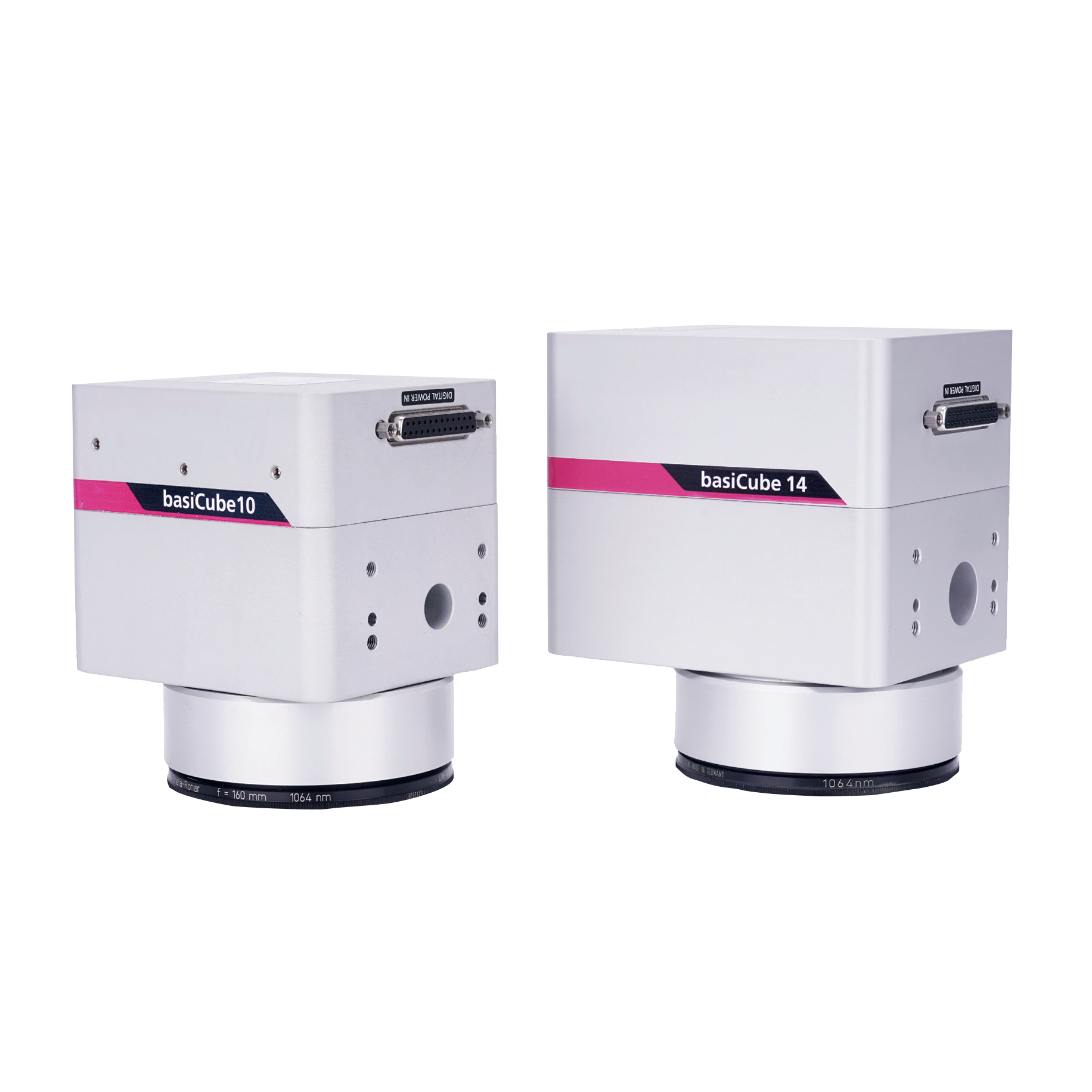
Fiber laser technology has revolutionized industrial cutting, marking, and welding applications across manufacturing sectors worldwide. Understanding how fiber laser technology works is essential for engineers, procurement specialists, and operations managers who depend on precision laser systems to meet production demands. Fiber laser technology delivers exceptional beam quality, efficiency, and reliability compared to traditional laser types, making it the preferred choice for demanding industrial environments where consistent performance matters most.
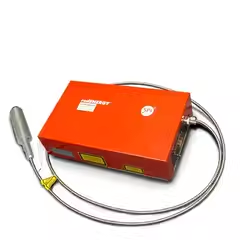
The fundamental advantage of fiber laser technology lies in its ability to generate high-powered, focused laser beams through optical fiber amplification rather than gas or solid-state methods. This approach creates superior beam quality, reduces maintenance requirements, and enables faster processing speeds across cutting, engraving, and material processing applications. Engineers select fiber laser technology for its reliability, compact design, and operational flexibility in production environments where downtime directly impacts profitability.
Core Principles Behind Fiber Laser Technology
Optical Fiber Amplification and Beam Generation
Fiber laser technology operates by pumping laser light into a specially doped optical fiber core, where rare-earth ions amplify the beam through stimulated emission. The fiber acts as both the laser medium and the waveguide, confining photons within a microscopic core diameter that measures just 10 to 20 micrometers. This extreme confinement creates exceptional beam quality measured by M-squared values typically below 1.1, meaning the beam focuses to a nearly perfect point at the workpiece surface. The compact geometry of fiber laser technology enables manufacturers to achieve higher power densities and more precise cutting than traditional CO2 or solid-state laser systems.
Wavelength Characteristics and Material Interaction
Fiber laser technology produces coherent light at a wavelength of approximately 1.064 micrometers in the near-infrared spectrum, which differs significantly from CO2 laser wavelengths at 10.6 micrometers. This shorter wavelength of fiber laser technology allows it to absorb efficiently into metals, plastics, and ceramics while producing minimal heat-affected zones around cut edges. The wavelength characteristics of fiber laser technology make it particularly effective for processing reflective materials like copper and aluminum, where CO2 lasers prove inefficient due to poor absorption. Engineers designing manufacturing workflows leverage fiber laser technology's wavelength advantage to reduce material waste and achieve superior edge quality on sensitive applications.
System Architecture and Component Integration
Pump Source, Fiber Amplifier, and Delivery Systems
Modern fiber laser technology systems comprise three essential components working in integrated harmony. The pump source, typically high-power semiconductor lasers emitting at 976 or 980 nanometers, energizes the rare-earth doped fiber core. The fiber amplifier section contains ytterbium or erbium-doped fiber that receives pump energy and amplifies the seed laser signal through stimulated emission processes inherent to fiber laser technology. Output beams exit the fiber amplifier and travel through precision optics to the processing head, where scan heads or galvanometric systems direct the beam across the workpiece with submicron accuracy. This architecture of fiber laser technology eliminates many moving parts and thermal management challenges associated with older laser generations.
Cooling, Electrical Efficiency, and Operating Parameters
Fiber laser technology demonstrates electrical-to-optical conversion efficiency exceeding 70 percent, dramatically lower than the 5 to 15 percent efficiency typical of CO2 systems. The concentrated energy density within the optical fiber core generates manageable heat that water cooling systems remove through integrated heat exchangers. Manufacturers operating fiber laser technology benefit from reduced facility cooling requirements and lower electricity consumption compared to equivalent-power CO2 or lamp-pumped solid-state systems. Operating parameters of fiber laser technology include adjustable pulse repetition rates from kilohertz to megahertz ranges, enabling fine-tuning for different material thicknesses and surface finishes. Power scaling from 20 watts to over 10 kilowatts maintains the beam quality advantages of fiber laser technology across the entire power spectrum.
Industrial Applications and Performance Advantages
Cutting, Marking, and Welding Operations
Fiber laser technology excels at cutting thin to medium-thickness metals with edge quality and processing speed that surpass competitive technologies. Stainless steel, mild steel, and aluminum cutting benefit from the superior absorptivity of fiber laser technology's 1.064-micrometer wavelength, enabling clean cuts with minimal dross formation. Marking applications utilize fiber laser technology's precise beam positioning to create permanent identification codes, logos, and serial numbers on metal components without secondary cleaning. Welding operations employing fiber laser technology achieve narrow heat-affected zones and consistent weld profiles particularly valuable for automotive and aerospace component manufacturing. Plastic and rubber processing applications leverage fiber laser technology's capability to ablate polymers without melting edges, creating detailed engraved patterns in consumer packaging and industrial components.
Maintenance Requirements and Cost-of-Ownership Factors
Fiber laser technology systems require significantly less preventive maintenance than CO2 or solid-state alternatives because the sealed optical fiber design eliminates routine mirror cleaning and alignment procedures. The absence of gas refills, gas tube replacements, and complex cooling system servicing associated with other laser types reduces operational expenses substantially. A well-maintained fiber laser technology installation typically operates 30,000 to 50,000 production hours before requiring component replacement or major service interventions. Fixed operating costs for electricity, water cooling, and facility requirements with fiber laser technology remain predictable and budget-friendly throughout the system's operational life. Manufacturers comparing total cost of ownership find that fiber laser technology systems achieve payback periods 20 to 40 percent shorter than equivalent CO2 installations when calculating productivity gains and reduced maintenance labor.
Material Processing Capabilities and Industry Applications
Metal Processing and Precision Tolerances
Fiber laser technology delivers precision cutting on stainless steel, titanium, and specialty alloys with tolerances as tight as plus-or-minus 0.1 millimeter on complex geometric patterns. The focused beam produced by fiber laser technology enables cutting of intricate shapes in automotive brackets, medical implant components, and aerospace fasteners that other technologies cannot achieve economically. Annealing and surface treatment applications use fiber laser technology to selectively harden specific regions of metal parts without affecting adjacent material properties. Tube and pipe cutting benefits from the beam quality of fiber laser technology, which maintains sharp focus along extended working distances required for rotated cylindrical components. Three-dimensional contouring capabilities of modern fiber laser technology systems enable simultaneous cutting and angled edge production on compound geometry parts.
Non-Metal and Hybrid Material Processing
Fiber laser technology processes non-metal materials including ceramics, composite resins, anodized coatings, and laminated structures with precision unavailable from mechanical cutting alone. Medical device manufacturers rely on fiber laser technology to create sterile surfaces on titanium implants by selectively removing oxide layers without introducing particulate contamination. Electronics manufacturers employ fiber laser technology for selective ablation of conformal coatings and trace removal on circuit board assemblies. Leather, textiles, and fabric industries utilize fiber laser technology's beam precision to create decorative patterns and personalized markings on consumer products. Hybrid material sandwiches combining metals, plastics, and adhesives process reliably with fiber laser technology because the beam energy becomes absorbed primarily by the target layer rather than damaging underlying substrates.
FAQ
What distinguishes fiber laser technology from CO2 laser systems?
Fiber laser technology operates at 1.064-micrometer wavelengths that absorb efficiently into metals, while CO2 lasers at 10.6 micrometers reflect poorly from metallic surfaces. Fiber laser technology achieves 70 percent electrical efficiency compared to 5 to 15 percent for CO2 systems, resulting in dramatically lower operating costs. The sealed optical fiber design of fiber laser technology eliminates frequent mirror cleaning and gas replacements required by CO2 systems. Beam quality of fiber laser technology typically measures M-squared below 1.1, enabling finer cutting precision and smaller focus spots than CO2 laser alternatives.
How does beam quality in fiber laser technology affect cutting performance?
Superior beam quality from fiber laser technology enables focusing to smaller spot sizes, creating narrower cuts with minimal heat-affected zones on temperature-sensitive materials. The excellent beam propagation characteristics of fiber laser technology maintain focus consistency over extended cutting distances and on angled workpiece surfaces. Precision marking and detailed engraving processes depend on the focused beam intensity provided by fiber laser technology to create sharp, high-contrast surface identification. Production throughput increases when fiber laser technology's beam quality enables faster cutting speeds and reduces secondary edge finishing operations.
What maintenance schedule should operators follow for fiber laser technology systems?
Fiber laser technology systems require quarterly inspection of cooling water parameters, annual replacement of water filters, and monthly visual checks of external optics for contamination. Unlike CO2 systems, fiber laser technology eliminates the need for routine mirror alignment and gas tube servicing, reducing skilled technician requirements significantly. Fiber laser technology installations benefit from predictable maintenance intervals because sealed fiber designs prevent optical contamination from airborne particles. Preventive maintenance programs for fiber laser technology typically cost 40 to 50 percent less annually than CO2 system maintenance while delivering superior reliability and consistent output power.