 EN
EN
 AR
AR
 FR
FR
 DE
DE
 JA
JA
 KO
KO
 RU
RU
 ES
ES


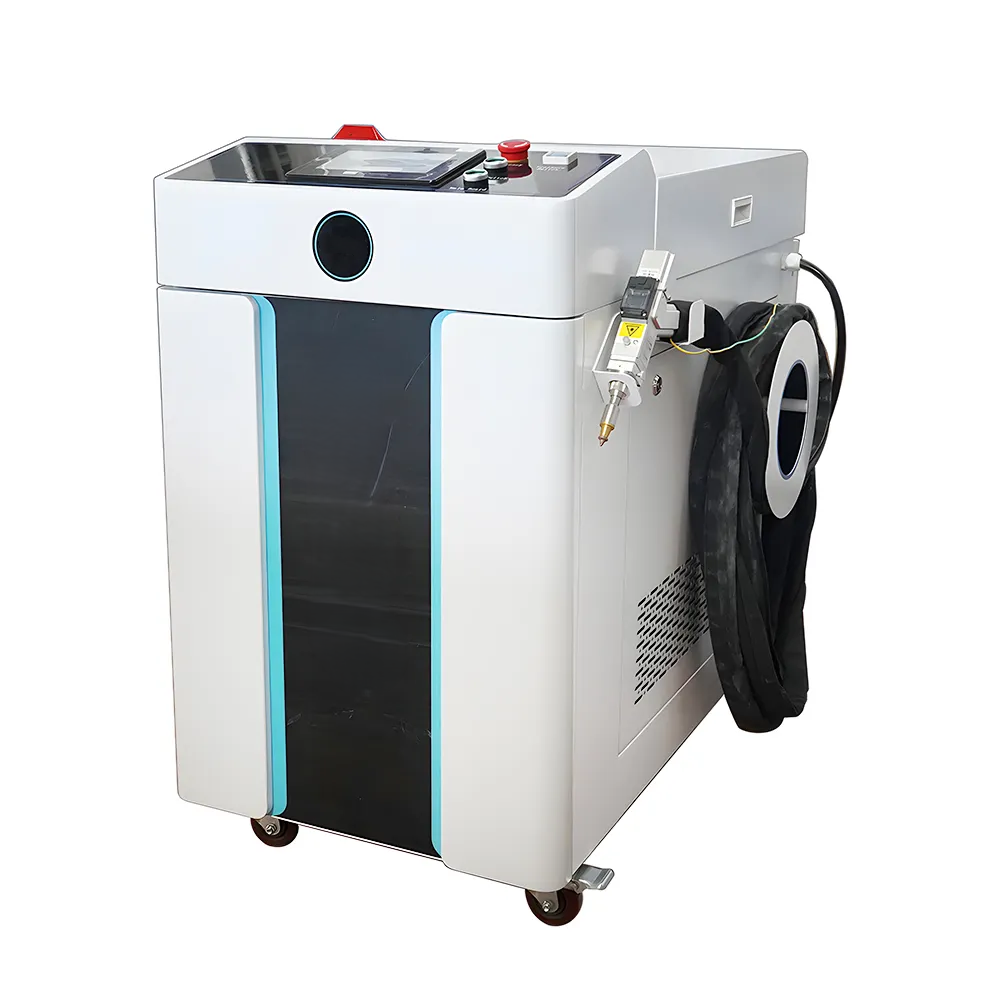
Working with a continuous laser system demands more than technical skill — it requires a thorough understanding of the safety standards, regulatory frameworks, and operational best practices that govern high-power laser use in industrial environments. Unlike pulsed systems that emit brief bursts of energy, a continuous laser delivers a constant, uninterrupted beam, which significantly elevates both the potential hazards and the responsibility placed on operators, safety officers, and facility managers. Whether you are deploying a continuous laser for surface cleaning, material processing, or industrial decoating, compliance with established safety protocols is not optional — it is a foundational requirement for protecting people, equipment, and production integrity.
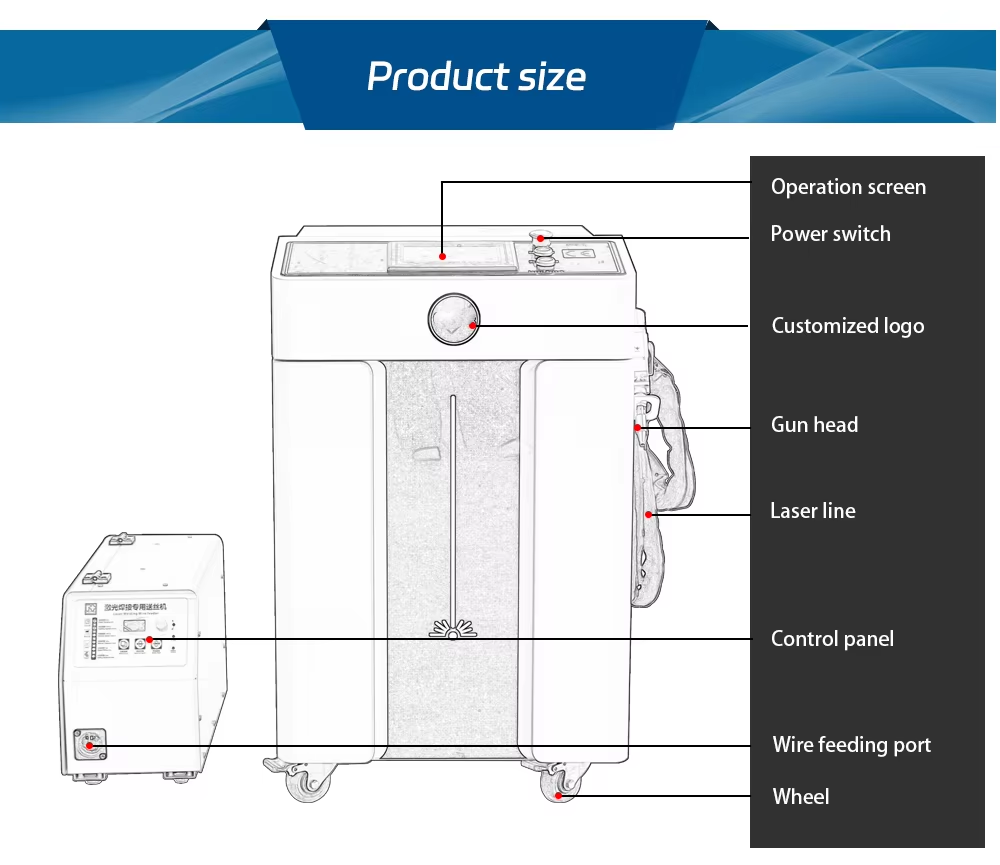
The industrial adoption of continuous laser technology has accelerated sharply in recent years, driven by demand for faster, more precise, and chemically-free surface treatment solutions. With that growth comes increased scrutiny from regulatory bodies, insurance providers, and occupational health authorities. Understanding how safety standards are structured, what classifications apply to your equipment, and how best practices translate into daily operational discipline is essential for any facility running continuous laser equipment. This article outlines the core safety principles, international standards, and practical measures every industrial operator should know.
Understanding Continuous Laser Classification and Hazard Levels
How Laser Classes Apply to Continuous Beam Systems
Laser classification is the foundation of any safety program. International standards, particularly IEC 60825-1, classify lasers based on their potential to cause harm under reasonably foreseeable conditions. For a continuous laser operating at industrial power levels — often ranging from hundreds to thousands of watts — the classification almost universally falls into Class 4, the highest hazard category. A Class 4 continuous laser can cause immediate and severe damage to the eyes and skin, ignite combustible materials, and create secondary hazards from reflected beams. Understanding this classification is not just academic; it directly determines the engineering controls, personal protective equipment, and access restrictions your facility must implement.
The key differentiator of a continuous laser from a pulsed laser in terms of classification is the concept of accessible emission limits (AEL). Because a continuous laser does not pause between pulses, the energy delivered over time is substantially greater at the same peak power. This makes the AEL calculation for continuous laser systems more conservative, pushing them into higher hazard tiers even at moderate output levels. Facilities must account for this distinction when performing initial risk assessments and when selecting appropriate safety measures for their specific application environment.
Classification also carries direct implications for documentation and legal liability. Any organization deploying a Class 4 continuous laser is required under most national frameworks to maintain up-to-date safety data sheets, operator training records, and periodic equipment inspection logs. These documents form the evidentiary basis for regulatory compliance and are critical in the event of a workplace incident review. Treating classification as a living, operational concept rather than a one-time checklist item is the mark of a mature laser safety program.
Beam Hazard Zones and Nominal Ocular Hazard Distance
For every continuous laser installation, a beam hazard analysis must be conducted to define the Nominal Ocular Hazard Distance (NOHD). The NOHD is the distance beyond which the continuous laser beam is no longer capable of causing eye injury even without protective eyewear. Inside this distance, all personnel must wear certified laser safety eyewear calibrated to the specific wavelength and power level of the system in operation. Calculating the NOHD involves variables including beam divergence, output power, and the minimum permissible exposure for the eye at the relevant wavelength — typically 1064 nm for fiber-based continuous laser systems.
Establishing exclusion zones based on NOHD calculations is a mandatory step in continuous laser installation planning. These zones define where the beam travels, where reflections may occur, and where secondary hazards such as thermal radiation or fume generation are likely to be present. Physical barriers, interlocked enclosures, and beam stops must be positioned to ensure that no unintended exposure occurs within the designated hazard zone. The NOHD is not a static value — it should be recalculated whenever the system configuration changes, including when beam delivery optics are modified or output power is adjusted.
Key International Standards Governing Continuous Laser Safety
IEC 60825-1 and Its Industrial Relevance
IEC 60825-1 is the primary international standard for laser product safety and serves as the technical backbone for continuous laser regulation across Europe, Asia, and much of the Americas. It defines classification criteria, labeling requirements, engineering control specifications, and user information obligations for laser manufacturers and operators alike. For industrial users of continuous laser equipment, the standard's requirements translate into practical mandates: safety interlocks must be functional, beam enclosures must meet specified optical density thresholds, and emergency stop mechanisms must be tested regularly. National derivatives of IEC 60825-1 — such as EN 60825-1 in Europe and ANSI Z136.1 in the United States — add jurisdiction-specific nuances while maintaining alignment with the core international framework.
One of the most important provisions of IEC 60825-1 for continuous laser operators is the requirement for a designated Laser Safety Officer (LSO). The LSO is responsible for overseeing all aspects of laser safety within the facility, from conducting hazard assessments to approving changes in operating procedures. In environments where a continuous laser is used for tasks such as rust removal, paint stripping, or industrial cleaning, the LSO plays a critical role in evaluating fume extraction requirements, managing beam control protocols, and ensuring that training records reflect current operational realities. The appointment of a qualified LSO is not a bureaucratic formality — it is a structural safeguard against the systemic safety failures that typically precede incidents.
ANSI Z136 Standards and North American Compliance
In North American industrial contexts, the ANSI Z136 series provides the most operationally detailed guidance for continuous laser safety. ANSI Z136.1 covers general laser safety, while ANSI Z136.9 specifically addresses laser use in manufacturing environments — making it directly applicable to facilities deploying continuous laser cleaning or processing equipment. These standards outline the minimum requirements for controlled laser areas, the criteria for safe beam path termination, and the procedural standards for maintenance activities involving continuous laser systems. Compliance with ANSI Z136 is often required by insurers and is increasingly incorporated into procurement contracts for industrial equipment.
A key concept in ANSI Z136 is the Nominal Hazard Zone (NHZ), which is the operational equivalent of the NOHD but extends to skin and fire hazards as well. For a high-power continuous laser used in surface treatment applications, the NHZ must be clearly demarcated in the facility layout, with appropriate signage, barriers, and access controls preventing unauthorized entry. ANSI Z136.9 also requires that process-specific risk assessments account for the particular hazards introduced by the materials being processed — including the generation of metal fumes, oxide particles, and coating vapors that are commonly produced during continuous laser cleaning operations.
Engineering Controls and Facility Design for Continuous Laser Operations
Beam Enclosures, Interlocks, and Emergency Systems
Effective engineering controls form the first and most reliable line of defense in any continuous laser safety program. Unlike administrative controls that depend on human behavior, engineering controls are built into the equipment and facility design to prevent hazardous exposures automatically. For continuous laser systems, beam enclosures that meet the optical density requirements of the operating wavelength are essential. These enclosures must be constructed from materials capable of withstanding direct beam exposure without degrading, melting, or transmitting hazardous radiation. The structural integrity of beam enclosures should be verified during installation and re-inspected following any physical modification to the workspace.
Safety interlocks are another non-negotiable engineering control for continuous laser installations. Interlocks are designed to interrupt beam emission immediately when a hazardous condition is detected — such as an enclosure door being opened while the laser is active, or a beam path sensor detecting an obstruction. For industrial-grade continuous laser systems used in cleaning and decoating applications, interlocks should be hardwired rather than software-only to ensure fail-safe behavior. Emergency stop (E-stop) buttons must be positioned at all operator stations and at all access points to the laser work area, and they must be tested at defined intervals documented in the facility's maintenance log.
Fume Extraction and Air Quality Management
One of the most frequently underestimated hazards associated with continuous laser processing is the generation of airborne contaminants. When a continuous laser is used to remove rust, paint, coatings, or other surface materials, the ablation process produces metal oxides, volatile organic compounds, and fine particulate matter that can pose serious respiratory and environmental risks. Industrial-grade fume extraction systems with HEPA and activated carbon filtration are required to capture and neutralize these contaminants at the point of generation. The extraction system must be sized appropriately for the volume of material being processed and for the footprint of the work area.
Air quality monitoring should complement fume extraction as part of a comprehensive continuous laser safety program. Regular measurement of particulate concentrations and chemical exposure levels ensures that filtration systems are functioning effectively and that operator exposure remains within permissible limits defined by occupational health standards. When processing materials with known toxic components — such as lead-based paints or chromate coatings — enhanced extraction protocols and personal respiratory protection are mandatory, even when a fully enclosed continuous laser system is in use. Safety data sheets for the substrate materials being processed should always be reviewed before initiating any new continuous laser application.
Operator Training, Personal Protective Equipment, and Daily Safety Practices
Structured Training Programs for Continuous Laser Operators
No engineering control can fully compensate for untrained operators. A structured training program for personnel working with continuous laser equipment is a regulatory requirement under most international standards and a practical necessity for maintaining safe operations. Training should cover the physics of continuous laser operation, the specific hazard profile of the equipment in use, emergency response procedures, and the proper use of all protective equipment. Initial training must be documented, and refresher training should be conducted at regular intervals or whenever equipment configurations or processes change significantly. Operators who understand why safety measures exist — not just what they are — demonstrate measurably better compliance and hazard recognition in real-world conditions.
Training should also address the behavioral hazards specific to continuous laser environments: the temptation to override interlocks for convenience, the normalization of risk in high-production settings, and the false sense of security that enclosed systems can create. A well-designed training program uses incident case studies, practical demonstrations, and scenario-based assessments to build genuine competence rather than checkbox compliance. The Laser Safety Officer should lead or supervise all training activities and maintain direct responsibility for evaluating operator readiness before authorizing independent operation of any continuous laser system.
Selecting and Maintaining Laser Safety Eyewear
Laser safety eyewear is the most critical item of personal protective equipment for continuous laser operators, and selecting the wrong eyewear is as dangerous as wearing none at all. Eyewear must be certified to the specific wavelength of the continuous laser in use and must provide an optical density sufficient to reduce beam irradiance to below the maximum permissible exposure for the eye. For fiber-based continuous laser systems operating at 1064 nm, this typically requires eyewear with an OD of 5 or greater, though the precise requirement depends on the power level and beam geometry of the specific installation. Eyewear specifications should be verified against the manufacturer's datasheets and cross-checked with the NOHD calculations for the facility.
Maintenance of laser safety eyewear is as important as initial selection. Lenses that are scratched, degraded, or contaminated no longer provide their rated optical density and must be replaced immediately. A formal inspection and replacement schedule for all laser protective eyewear should be built into the facility's safety management system. Eyewear should be stored in protective cases when not in use, and operators should be trained to inspect their eyewear before each use session. Because continuous laser systems can cause irreversible eye damage in fractions of a second, there is no acceptable margin for compromise in eyewear quality or condition.
Regulatory Compliance, Auditing, and Continuous Improvement
Building a Laser Safety Management System
Compliance with continuous laser safety standards is most effectively managed through a formal safety management system rather than through ad hoc procedures. A laser safety management system establishes the policies, processes, roles, and review cycles that keep safety practices current, documented, and organizationally embedded. It defines how risk assessments are conducted and updated, how incidents and near-misses are reported and investigated, and how safety performance is measured over time. For organizations operating multiple continuous laser systems or multiple shifts, a management system approach ensures consistency across all operational contexts and provides the audit trail required by regulators and insurers.
Periodic internal audits of the laser safety management system are essential for identifying gaps before they become incidents. Audits should evaluate not only document compliance but actual operational behavior — whether interlocks are being tested, whether fume extraction is being used consistently, and whether operators are genuinely following established protocols rather than improvising shortcuts. External audits by qualified laser safety consultants add an independent perspective and are increasingly requested by clients and regulatory bodies in industries where continuous laser processing is used on high-value or safety-critical components.
Staying Current with Evolving Standards and Technologies
The landscape of continuous laser technology is evolving rapidly, and safety standards must keep pace. As continuous laser systems increase in power density and find new applications in industries ranging from aerospace maintenance to cultural heritage conservation, regulatory bodies regularly update their guidance to reflect new hazard profiles and operational contexts. Facilities using continuous laser equipment should maintain active memberships in relevant professional bodies, subscribe to standard update notifications from bodies such as IEC, ANSI, and national occupational health agencies, and periodically review their internal safety protocols against current best practices.
Continuous improvement in laser safety is not simply a compliance exercise — it reflects a genuine organizational commitment to protecting the people who operate sophisticated equipment in demanding industrial environments. Investing in updated training materials, advanced fume management solutions, and ergonomic safety infrastructure for continuous laser workstations demonstrates leadership that resonates with employees, clients, and regulators alike. The standard of care expected of organizations deploying high-power continuous laser technology will only increase as the technology becomes more widespread and its hazards become better understood.
FAQ
What makes a continuous laser more hazardous than a pulsed laser in industrial settings?
A continuous laser emits a constant, uninterrupted beam rather than discrete pulses, which means that exposure to the beam over time delivers a much higher total energy dose than most pulsed systems at comparable peak power. This sustained energy delivery increases the risk of thermal damage to eyes and skin, raises the fire hazard from beam contact with combustible materials, and requires more robust engineering controls and protective equipment. The hazard profile of a continuous laser is why most industrial systems fall into the highest laser classification category under international standards.
How often should laser safety eyewear be replaced for continuous laser operations?
There is no universal fixed replacement interval for laser safety eyewear, but most safety programs recommend a formal inspection before each use and a scheduled replacement cycle of one to two years under normal industrial conditions. Eyewear used in high-contamination environments — such as continuous laser cleaning applications involving metal fumes or chemical coatings — may degrade faster and should be inspected more frequently. Any eyewear showing scratches, discoloration, or structural damage must be replaced immediately regardless of its age, as degraded lenses no longer provide their certified optical density protection.
Is a Laser Safety Officer legally required for facilities using a continuous laser?
In most jurisdictions and under major international standards including IEC 60825-1 and ANSI Z136.1, the appointment of a qualified Laser Safety Officer is mandatory for facilities operating Class 3B or Class 4 laser systems. Since industrial continuous laser equipment almost universally falls into Class 4, the LSO requirement applies in virtually all professional deployment scenarios. The LSO is responsible for conducting hazard assessments, approving operating procedures, overseeing operator training, and serving as the primary point of contact for regulatory inspections related to continuous laser safety.
What fume extraction standards apply to continuous laser cleaning applications?
Fume extraction for continuous laser cleaning operations must meet the requirements of both laser safety standards and applicable occupational health regulations for airborne contaminants. In Europe, the EN ISO 11553 series addresses safety of laser machining and includes guidance on fume management. In North America, OSHA permissible exposure limits for specific contaminants — such as metal oxides or paint vapors — govern extraction system performance requirements. At minimum, extraction systems for continuous laser cleaning should incorporate HEPA filtration for fine particulates and activated carbon filtration for volatile organic compounds, with regular filter replacement and air quality monitoring to confirm ongoing effectiveness.
Table of Contents
- Understanding Continuous Laser Classification and Hazard Levels
- Key International Standards Governing Continuous Laser Safety
- Engineering Controls and Facility Design for Continuous Laser Operations
- Operator Training, Personal Protective Equipment, and Daily Safety Practices
- Regulatory Compliance, Auditing, and Continuous Improvement
-
FAQ
- What makes a continuous laser more hazardous than a pulsed laser in industrial settings?
- How often should laser safety eyewear be replaced for continuous laser operations?
- Is a Laser Safety Officer legally required for facilities using a continuous laser?
- What fume extraction standards apply to continuous laser cleaning applications?