 EN
EN
 AR
AR
 FR
FR
 DE
DE
 JA
JA
 KO
KO
 RU
RU
 ES
ES


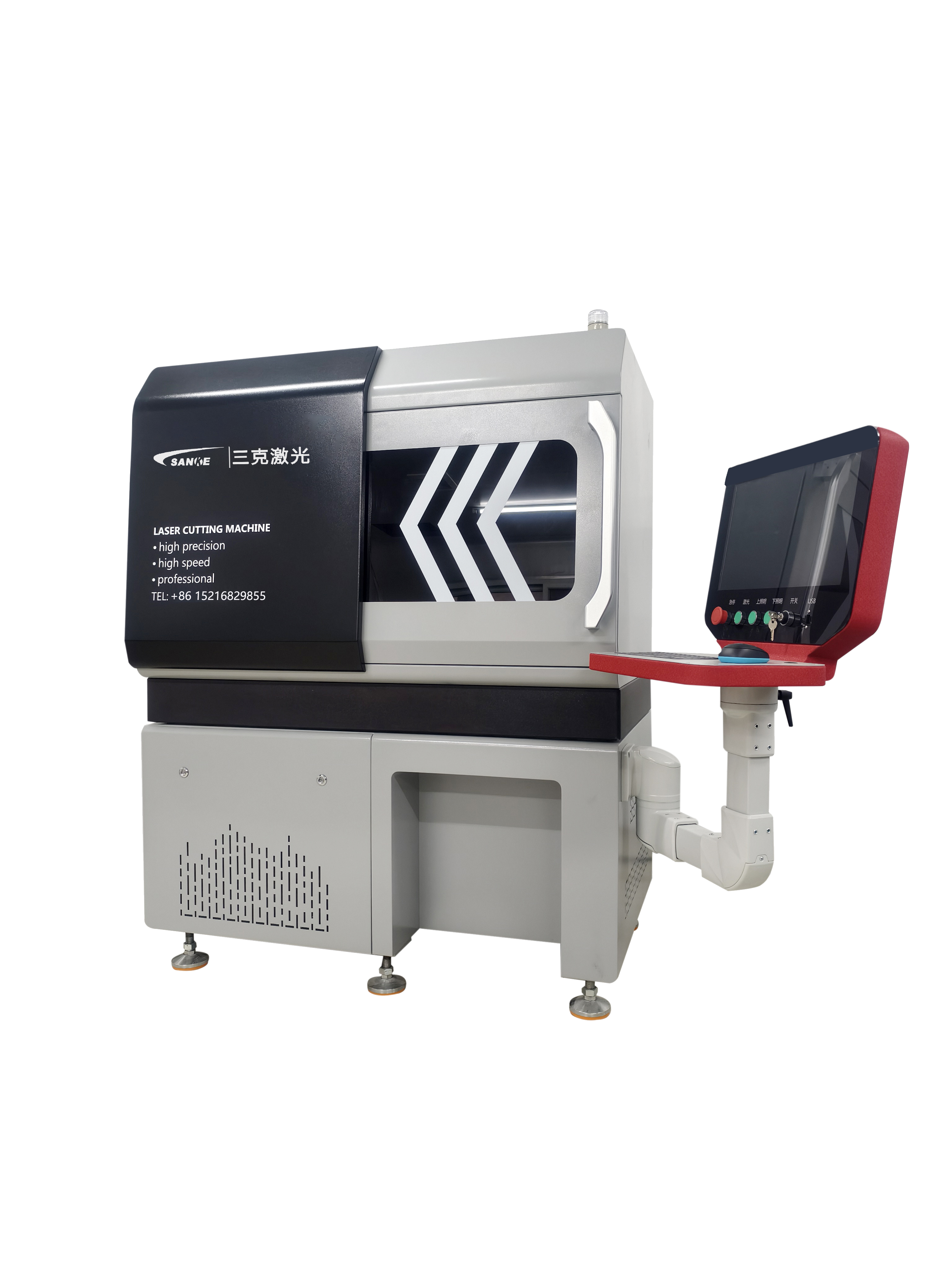
Laser drilling has revolutionized precision manufacturing across industries, offering unparalleled accuracy and versatility in creating microscopic to large-scale holes in various materials. This advanced technology utilizes focused laser beams to remove material through vaporization, melting, or ablation processes, delivering superior results compared to traditional mechanical drilling methods. Modern laser drilling systems provide manufacturers with the capability to achieve hole diameters as small as a few micrometers while maintaining exceptional edge quality and minimal thermal damage to surrounding materials.
Fundamental Principles of Laser Drilling Technology
Photon-Material Interaction Mechanisms
The effectiveness of laser drilling depends on complex photon-material interactions that occur when intense laser energy encounters the workpiece surface. During this process, photons transfer their energy to electrons within the material's atomic structure, causing rapid heating and subsequent phase transitions from solid to liquid and gas states. The absorption coefficient of the target material at the specific laser wavelength determines how efficiently energy transfer occurs, directly impacting drilling speed and hole quality.
Material properties such as thermal conductivity, melting point, and vaporization temperature significantly influence the laser drilling process dynamics. High thermal conductivity materials like copper require more energy to achieve localized heating, while ceramics with low thermal conductivity concentrate heat more effectively at the drilling site. Understanding these material characteristics enables manufacturers to optimize laser parameters for specific applications and achieve consistent results across different workpiece types.
Energy Density and Pulse Characteristics
Laser drilling systems utilize various pulse configurations to optimize material removal efficiency and minimize heat-affected zones around drilled holes. Continuous wave lasers provide steady energy delivery suitable for thick materials requiring deep penetration, while pulsed lasers offer precise control over energy deposition timing. Ultrashort pulse lasers, including femtosecond and picosecond systems, deliver extremely high peak power densities that enable clean material removal with minimal thermal effects.
The relationship between pulse duration, energy density, and repetition rate determines the overall drilling performance and hole characteristics. Shorter pulses reduce thermal diffusion time, preventing excessive heating of surrounding material and producing sharper hole edges. Proper pulse parameter selection allows manufacturers to balance drilling speed with hole quality requirements, optimizing production efficiency while maintaining strict dimensional tolerances.
Advanced Laser Drilling Techniques and Methods
Percussion Drilling Applications
Percussion laser drilling employs repeated laser pulses directed at a fixed location to gradually remove material and create holes through accumulated energy deposition. This technique excels in creating straight-walled holes with excellent dimensional accuracy, making it ideal for aerospace components, medical devices, and precision electronic assemblies. The stationary beam approach allows for precise control over hole geometry and ensures consistent wall surface quality throughout the drilling depth.
Modern percussion laser drilling systems incorporate advanced beam shaping optics and adaptive pulse control to optimize material removal rates while maintaining hole quality standards. Beam delivery systems can modify the intensity profile to achieve uniform energy distribution across the drilling area, preventing preferential material removal that could lead to hole distortion. These improvements have expanded percussion drilling applications to include challenging materials like superalloys and advanced composites.
Trepanning and Helical Drilling Methods
Trepanning represents a sophisticated laser drilling approach where the focused beam follows a circular path around the desired hole perimeter, gradually cutting through the material thickness. This method enables creation of larger diameter holes with superior edge quality compared to percussion techniques, while also allowing for complex hole geometries including tapered and stepped configurations. Trepanning systems utilize high-speed galvanometer mirrors or mechanical stages to precisely control beam positioning throughout the cutting process.
Helical drilling combines the benefits of trepanning with advanced three-dimensional beam movement patterns to optimize material removal efficiency and hole quality. The laser beam follows a helical path while gradually advancing through the material thickness, ensuring uniform energy distribution and preventing debris accumulation that could affect drilling performance. This technique proves particularly effective for thick materials and applications requiring excellent hole wall finish quality.
Material Considerations and Processing Parameters
Metallic Material Processing
Laser drilling of metallic materials requires careful consideration of thermal properties, optical absorption characteristics, and potential metallurgical changes during processing. Ferrous metals generally exhibit good laser absorption at near-infrared wavelengths, enabling efficient energy coupling and rapid material removal. However, highly reflective metals like aluminum and copper may require surface preparation or alternative laser wavelengths to achieve optimal drilling performance.
Processing parameters for metallic laser drilling must account for thermal conductivity variations and potential formation of heat-affected zones that could alter material properties. Pulse duration selection becomes critical when drilling thin metal sheets to prevent excessive thermal spreading, while thick sections may benefit from longer pulses or higher average power delivery. Advanced parameter control systems monitor real-time drilling progress and automatically adjust laser settings to maintain consistent hole quality across varying material conditions.
Non-Metallic Material Applications
Ceramic materials present unique challenges for laser drilling due to their brittle nature and potential for microcracking around drilled holes. Ultrashort pulse lasers prove particularly effective for ceramic processing, as they minimize thermal stress accumulation and reduce the likelihood of crack formation. Proper selection of processing parameters, including pulse energy, repetition rate, and assist gas flow, enables successful drilling of technical ceramics used in aerospace and electronic applications.
Polymer and composite materials respond well to laser drilling when appropriate wavelengths and processing conditions are selected. UV lasers often provide superior results for organic materials due to enhanced photon absorption and reduced thermal effects. Carbon fiber reinforced plastics require careful parameter optimization to prevent delamination and fiber pullout, while thermoplastic materials benefit from controlled heating rates that prevent excessive melting and resolidification effects around hole edges.
Industrial Applications and Market Sectors
Aerospace and Defense Manufacturing
The aerospace industry relies heavily on laser drilling technology for creating cooling holes in turbine engine components, where thousands of precisely positioned holes enable efficient thermal management in high-temperature environments. These applications demand exceptional hole quality, including smooth walls, consistent diameters, and minimal heat-affected zones that could compromise component performance. Laser drilling systems used in aerospace manufacturing typically incorporate sophisticated quality monitoring systems and automated inspection capabilities to ensure compliance with stringent industry standards.
Advanced aerospace materials, including nickel-based superalloys and ceramic matrix composites, present significant challenges that laser drilling technology addresses effectively. The ability to process these difficult-to-machine materials without tool wear or mechanical stress makes laser drilling indispensable for next-generation engine and airframe components. Manufacturers continue to push the boundaries of laser drilling capabilities to meet evolving aerospace requirements for lighter, stronger, and more efficient components.
Medical Device and Electronics Industries
Medical device manufacturing benefits significantly from laser drilling precision and cleanliness, particularly for implantable devices requiring biocompatible surface finishes and precise dimensional control. Cardiovascular stents, orthopedic implants, and surgical instruments frequently incorporate laser-drilled features that would be difficult or impossible to achieve using conventional manufacturing methods. The non-contact nature of laser drilling eliminates contamination risks and enables processing of delicate or sterile components without compromising their integrity.
Electronics manufacturing utilizes laser drilling extensively for creating via holes in printed circuit boards, particularly for high-density interconnect applications requiring extremely small hole diameters. Multi-layer PCB fabrication relies on laser drilling to create precise connections between circuit layers while maintaining signal integrity and minimizing electromagnetic interference. The rapid processing speeds achievable with modern laser drilling systems support high-volume electronics production requirements while maintaining the dimensional accuracy essential for reliable device performance.
Quality Control and Process Optimization
Measurement and Inspection Techniques
Effective quality control in laser drilling operations requires comprehensive measurement and inspection protocols that evaluate both dimensional accuracy and hole quality characteristics. Optical measurement systems provide non-contact evaluation of hole diameters, circularity, and edge quality, while coordinate measuring machines offer three-dimensional analysis of hole position accuracy and angular alignment. Advanced inspection techniques include cross-sectional analysis using microscopy and X-ray computed tomography for internal hole geometry assessment.
Real-time process monitoring systems integrate multiple sensor technologies to provide immediate feedback on drilling performance and quality metrics. Acoustic emission sensors detect material removal events and potential process anomalies, while thermal imaging monitors temperature distributions around the drilling zone. These monitoring capabilities enable automatic process adjustments and early detection of quality deviations, improving overall production efficiency and reducing scrap rates.
Parameter Optimization Strategies
Systematic optimization of laser drilling parameters requires understanding the complex relationships between laser settings, material properties, and desired hole characteristics. Design of experiments methodologies helps identify optimal parameter combinations while minimizing the number of test samples required. Machine learning algorithms increasingly support parameter optimization by analyzing historical processing data and predicting optimal settings for new applications or material combinations.
Adaptive control systems represent the next evolution in laser drilling optimization, automatically adjusting processing parameters based on real-time feedback from quality monitoring systems. These systems can compensate for material property variations, environmental changes, and equipment aging effects to maintain consistent drilling performance over extended production runs. The integration of artificial intelligence and advanced sensing technologies continues to enhance the precision and reliability of laser drilling operations across diverse industrial applications.
Future Trends and Technology Developments
Emerging Laser Technologies
Next-generation laser drilling systems incorporate breakthrough technologies that promise significant improvements in processing speed, quality, and versatility. Ultrafast laser sources with enhanced average power capabilities enable rapid drilling of challenging materials while maintaining the precision advantages of short-pulse processing. Fiber laser technology continues to evolve with improved beam quality and efficiency, making high-performance laser drilling more accessible to a broader range of manufacturing operations.
Beam shaping and delivery innovations allow unprecedented control over energy distribution during the drilling process, enabling customized hole profiles and improved processing of complex geometries. Adaptive optics systems can dynamically modify beam characteristics to compensate for material variations or optimize drilling performance for specific applications. These technological advances expand the capabilities of laser drilling systems while reducing operational complexity and training requirements for manufacturing personnel.
Industry Integration and Automation
The integration of laser drilling systems into automated manufacturing environments continues to advance through improved robotics, machine vision, and process control technologies. Smart manufacturing initiatives leverage Industrial Internet of Things connectivity to optimize laser drilling operations within broader production workflows. Predictive maintenance systems monitor equipment performance and schedule maintenance activities to minimize downtime while ensuring consistent drilling quality.
Collaborative robot systems enable flexible laser drilling setups that can adapt to changing production requirements and handle complex workpiece geometries. Advanced software platforms provide unified control of multiple laser drilling stations while maintaining comprehensive data logging and quality tracking capabilities. These developments support the transition toward fully autonomous laser drilling operations that can maintain high-quality output with minimal human intervention.
FAQ
What factors determine the maximum drilling depth achievable with laser systems
Maximum drilling depth depends on several interconnected factors including laser power, beam quality, material properties, and hole diameter requirements. Higher power lasers can achieve greater depths, but beam quality becomes critical for maintaining hole accuracy through thick materials. Material thermal properties affect how efficiently laser energy creates the drilling action, while smaller hole diameters generally limit achievable depth due to debris removal challenges and beam delivery constraints.
How does laser drilling compare to traditional mechanical drilling methods
Laser drilling offers significant advantages over mechanical methods including the ability to create extremely small holes, process hard or brittle materials, and eliminate tool wear issues. The non-contact nature prevents mechanical stress and contamination while enabling complex hole geometries impossible with drill bits. However, laser drilling may have higher equipment costs and requires specialized training, making mechanical drilling more suitable for simple applications in common materials.
What safety considerations are essential for laser drilling operations
Laser drilling safety requires comprehensive protocols addressing laser radiation exposure, fume extraction, and fire prevention measures. Proper laser safety eyewear, enclosed processing areas, and interlocked safety systems protect operators from direct and reflected laser radiation. Adequate ventilation systems remove potentially hazardous fumes generated during material processing, while fire suppression systems address ignition risks associated with high-energy laser operations.
Can laser drilling process multiple materials simultaneously in composite structures
Modern laser drilling systems can successfully process multi-material composites by adjusting parameters dynamically as the laser encounters different material layers. Advanced control systems monitor drilling progress and modify laser settings to accommodate varying absorption characteristics, thermal properties, and processing requirements of each material. However, optimal results often require careful parameter optimization and may involve compromises between processing speed and hole quality across different material interfaces.
Table of Contents
- Fundamental Principles of Laser Drilling Technology
- Advanced Laser Drilling Techniques and Methods
- Material Considerations and Processing Parameters
- Industrial Applications and Market Sectors
- Quality Control and Process Optimization
- Future Trends and Technology Developments
-
FAQ
- What factors determine the maximum drilling depth achievable with laser systems
- How does laser drilling compare to traditional mechanical drilling methods
- What safety considerations are essential for laser drilling operations
- Can laser drilling process multiple materials simultaneously in composite structures