robotic laser welding machine-0

Advanced Robotic Laser Welding Machine - Precision Automated Welding Solutions

Get a Free Quote

Our representative will contact you soon.
Email
Name
Company Name
Message
0/1000

robotic laser welding machine

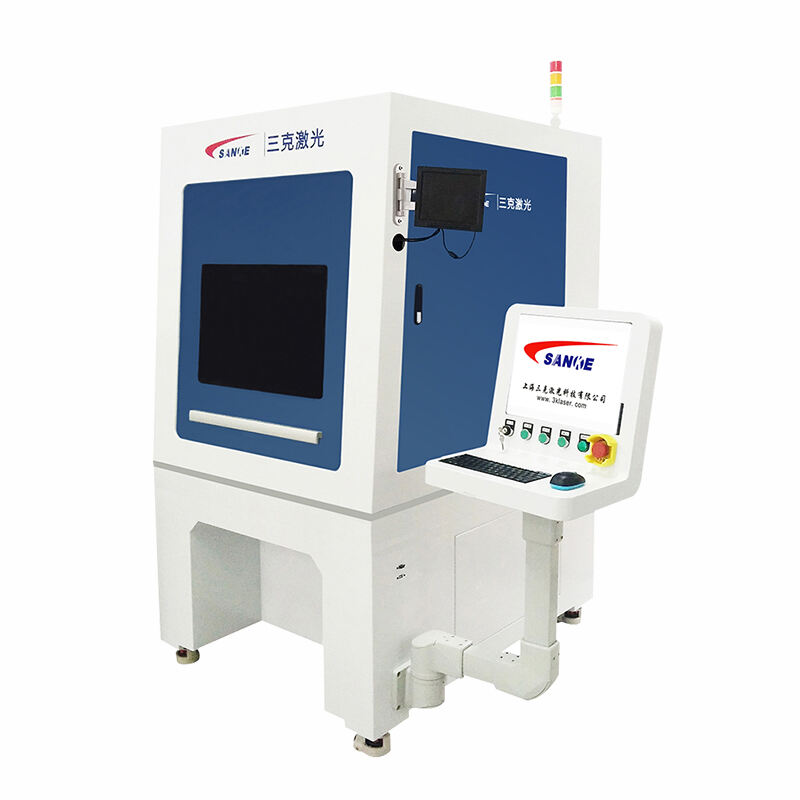
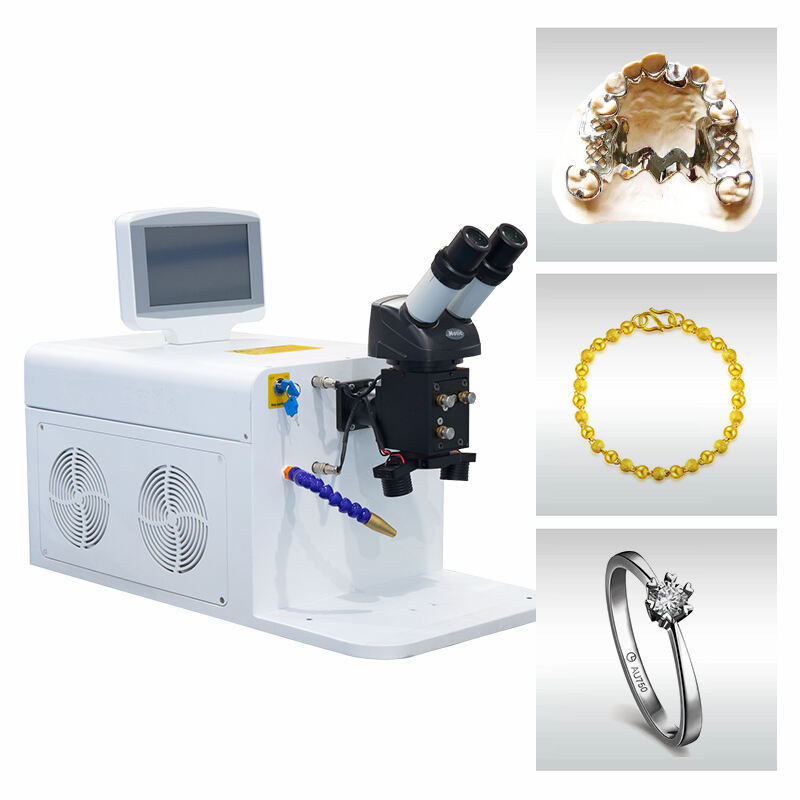
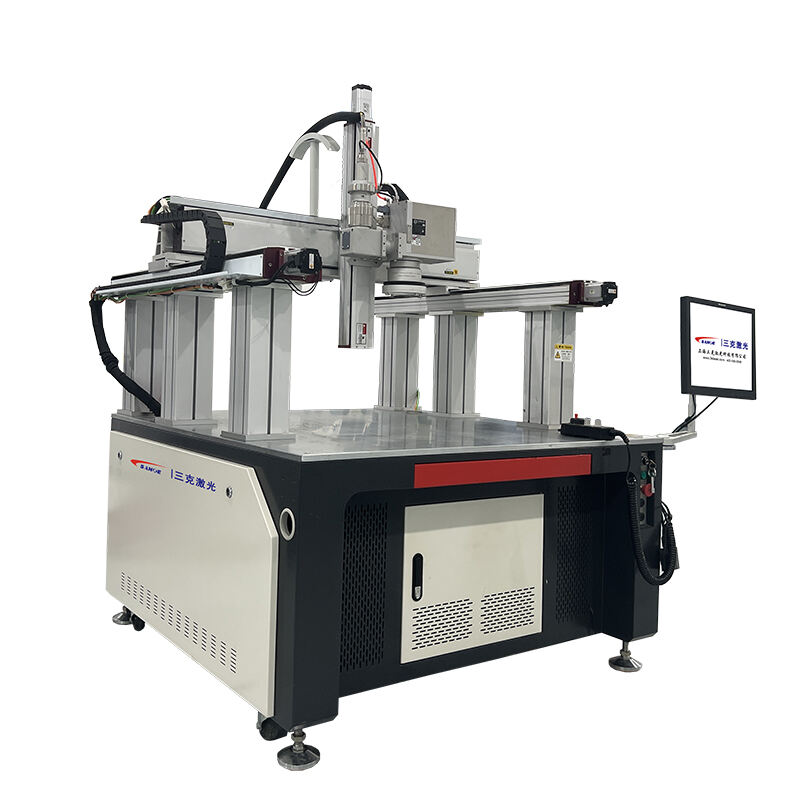
The robotic laser welding machine represents a revolutionary advancement in industrial manufacturing, combining precision automation with cutting-edge laser technology to deliver exceptional welding results across diverse industries. This sophisticated equipment integrates a high-powered laser source with a programmable robotic arm, creating an automated welding system that operates with remarkable accuracy and consistency. The robotic laser welding machine utilizes concentrated laser beams to melt and fuse materials together, producing clean, strong welds with minimal heat-affected zones. The core functionality centers around its ability to follow pre-programmed welding paths with millimeter-level precision, ensuring repeatable results for complex geometries and intricate joint configurations. Key technological features include advanced motion control systems, real-time monitoring capabilities, and adaptive welding parameters that automatically adjust based on material thickness and joint requirements. The machine incorporates sophisticated sensors that detect variations in workpiece positioning and compensate accordingly, maintaining optimal welding quality throughout the process. Its modular design allows for easy integration into existing production lines, while the intuitive programming interface enables operators to quickly set up new welding sequences. The robotic laser welding machine excels in applications requiring high-quality welds, including automotive body assembly, aerospace component fabrication, medical device manufacturing, and electronics production. Industries benefit from its ability to weld dissimilar materials, create hermetic seals, and produce aesthetically pleasing joints without post-processing requirements. The system supports various welding modes, including continuous wave and pulsed operation, allowing optimization for different material combinations and thickness ranges. Safety features include enclosed working areas with laser-safe viewing windows, emergency stop systems, and comprehensive safety interlocks that protect operators from laser radiation exposure.

New Product Releases

The robotic laser welding machine delivers numerous practical benefits that directly impact manufacturing efficiency and product quality. First, this advanced system significantly reduces production time by eliminating manual positioning and setup procedures, allowing continuous operation with minimal human intervention. Manufacturers experience substantial cost savings through reduced labor requirements and decreased material waste, as the precise laser control minimizes over-welding and eliminates the need for filler materials in many applications. The robotic laser welding machine produces superior weld quality compared to traditional welding methods, creating stronger joints with excellent mechanical properties and superior aesthetics. The narrow heat-affected zone prevents warping and distortion, particularly crucial when working with thin materials or heat-sensitive components. Consistency represents another major advantage, as the robotic laser welding machine delivers identical results across thousands of parts, eliminating human error and variability that plague manual welding processes. This reliability translates to reduced inspection requirements and lower rejection rates, improving overall production efficiency. The system offers exceptional flexibility, easily adapting to new products through simple programming changes rather than expensive tooling modifications. Manufacturers can quickly switch between different welding patterns, adjust parameters for various material thicknesses, and accommodate design changes without significant downtime. Energy efficiency stands out as another compelling benefit, as laser welding requires less power than conventional arc welding methods while delivering faster processing speeds. The robotic laser welding machine operates in smaller spaces compared to traditional welding setups, maximizing factory floor utilization and enabling compact production cell designs. Maintenance requirements remain minimal due to the non-contact nature of laser welding, which eliminates electrode replacement and reduces consumable costs. The clean welding process produces no spatter or smoke, creating a healthier work environment and reducing cleanup requirements. Long-term operational benefits include extended equipment life, predictable maintenance schedules, and the ability to handle increasingly complex welding challenges as product designs evolve. These advantages combine to provide manufacturers with a competitive edge through improved quality, reduced costs, and enhanced production capabilities.

Practical Tips

How can laser welding be applied to different materials, and what are the challenges?

19

Nov

How can laser welding be applied to different materials, and what are the challenges?

Laser welding has revolutionized modern manufacturing processes by offering unprecedented precision and versatility in joining various materials. This advanced technique utilizes focused laser beams to create high-quality welds with minimal heat-affe...
View More
What industries benefit most from laser welding technology?

19

Nov

What industries benefit most from laser welding technology?

Modern manufacturing has witnessed a revolutionary shift in welding technology as industries increasingly adopt advanced laser welding systems. The laser welding machine represents a significant technological leap from conventional welding methods, o...
View More
How Do Different Laser Sources Impact the Efficiency of Industrial Processes?

19

Nov

How Do Different Laser Sources Impact the Efficiency of Industrial Processes?

Industrial manufacturing has undergone a revolutionary transformation with the integration of advanced laser technology, where different laser sources serve as the cornerstone of precision processing across numerous sectors. The selection of appropri...
View More
Common Field Lens Problems and Solutions

21

Oct

Common Field Lens Problems and Solutions

Understanding the Complexities of Field Lens Performance Field lenses play a crucial role in optical systems, serving as vital components that help collect and direct light effectively. These specialized optical elements are designed to improve image...
View More

Get a Free Quote

Our representative will contact you soon.
Email
Name
Company Name
Message
0/1000

robotic laser welding machine

Unmatched Precision and Repeatability

Unmatched Precision and Repeatability

The robotic laser welding machine sets new standards for precision manufacturing through its extraordinary accuracy and repeatability capabilities. This advanced system achieves positioning accuracy within 0.1mm, ensuring consistent weld placement even on the most intricate components. The integration of high-resolution encoders and advanced servo motors enables the robot to follow complex three-dimensional welding paths with remarkable precision, maintaining exact positioning throughout extended production runs. The robotic laser welding machine utilizes sophisticated feedback control systems that continuously monitor and adjust welding parameters in real-time, compensating for minor variations in part positioning or material properties. This intelligent adaptation ensures that every weld meets exact specifications, regardless of environmental conditions or material tolerances. The laser beam focus control system maintains optimal energy density throughout the welding process, automatically adjusting for changes in joint geometry or surface conditions. Manufacturers benefit from this precision through dramatically reduced scrap rates and elimination of rework requirements, as parts consistently meet tight tolerance specifications without manual intervention. The repeatability factor becomes particularly valuable in high-volume production environments where thousands of identical parts require welding with identical quality standards. Traditional welding methods struggle to maintain such consistency over extended periods, often requiring frequent adjustments and quality checks. The robotic laser welding machine eliminates these concerns by delivering identical results from the first part to the thousandth, enabling lean manufacturing practices and just-in-time production strategies. Quality control processes become more efficient as manufacturers can rely on the system's inherent precision rather than implementing extensive inspection procedures. This reliability translates to improved customer satisfaction through consistent product quality and reduced warranty claims. The precision capabilities also enable manufacturers to explore new design possibilities, creating products with tighter joint tolerances and more complex geometries that would be impossible with conventional welding methods.
Exceptional Speed and Productivity Enhancement

Exceptional Speed and Productivity Enhancement

The robotic laser welding machine revolutionizes manufacturing throughput by delivering welding speeds that far exceed traditional methods while maintaining superior quality standards. This high-performance system achieves welding speeds up to ten times faster than conventional arc welding processes, dramatically reducing cycle times and increasing production capacity. The rapid processing capability stems from the concentrated laser energy that instantly melts materials without requiring preheating or extensive preparation procedures. Unlike traditional welding methods that require multiple passes for thick sections, the robotic laser welding machine often completes joints in single passes, eliminating intermediate steps and reducing overall processing time. The automated operation eliminates delays associated with manual positioning, clamping, and torch manipulation, enabling continuous production flows that maximize equipment utilization. Manufacturers experience significant productivity gains through reduced changeover times, as the robotic laser welding machine adapts to new part configurations through simple programming modifications rather than physical setup changes. The system supports batch processing of multiple parts simultaneously, further amplifying productivity benefits through parallel welding operations. Quick start capabilities allow the machine to begin welding immediately upon part loading, eliminating warm-up periods required by other welding technologies. The robotic laser welding machine operates reliably during extended shifts without performance degradation, supporting round-the-clock production schedules that maximize return on investment. Advanced path planning algorithms optimize robot movements to minimize air travel time between welds, ensuring maximum productive time utilization. The high-speed capabilities enable manufacturers to meet tight delivery schedules and respond quickly to changing market demands. Production planning becomes more predictable due to consistent processing times, allowing better resource allocation and improved customer service. The speed advantages translate directly to competitive benefits through reduced labor costs per unit, lower overhead allocation, and improved cash flow through faster inventory turnover. These productivity enhancements position manufacturers to capture larger market shares while maintaining profitability in competitive industries.
Versatile Material Processing Capabilities

Versatile Material Processing Capabilities

The robotic laser welding machine demonstrates remarkable versatility through its ability to process an extensive range of materials and joint configurations that challenge traditional welding methods. This advanced system successfully welds metals ranging from thin foils measuring 0.1mm thickness to heavy sections exceeding 25mm, adapting laser parameters automatically to optimize penetration and heat input for each application. The robotic laser welding machine excels at joining dissimilar materials that prove difficult or impossible with conventional techniques, including aluminum to steel, copper to stainless steel, and various exotic alloy combinations. This capability opens new design possibilities for manufacturers seeking to optimize component performance through strategic material selection. The system handles both ferrous and non-ferrous metals with equal proficiency, including aluminum, steel, titanium, copper, brass, and specialized superalloys used in aerospace applications. Surface preparation requirements remain minimal compared to traditional welding, as the laser beam effectively cleans and processes materials simultaneously. The robotic laser welding machine accommodates various joint geometries including butt joints, lap joints, T-joints, and complex three-dimensional seams that follow curved or angled paths. Filler material becomes unnecessary in many applications due to the precise heat control and deep penetration characteristics of laser welding, simplifying material handling and reducing costs. The system processes both thick and thin sections within the same weldment, automatically adjusting power levels and travel speeds to prevent burn-through while ensuring complete fusion. Reflective materials like aluminum and copper, traditionally challenging for laser processing, benefit from advanced beam delivery systems that overcome reflectivity issues. The robotic laser welding machine creates hermetic seals essential for medical devices, electronic enclosures, and automotive fuel systems, meeting stringent leak-proof requirements. Complex assemblies involving multiple materials and varying thicknesses process efficiently through programmed welding sequences that optimize parameters for each joint. This versatility enables manufacturers to consolidate multiple welding processes into single robotic cells, reducing equipment investment and floor space requirements while improving production flow efficiency.

Get a Free Quote

Our representative will contact you soon.
Email
Name
Company Name
Message
0/1000