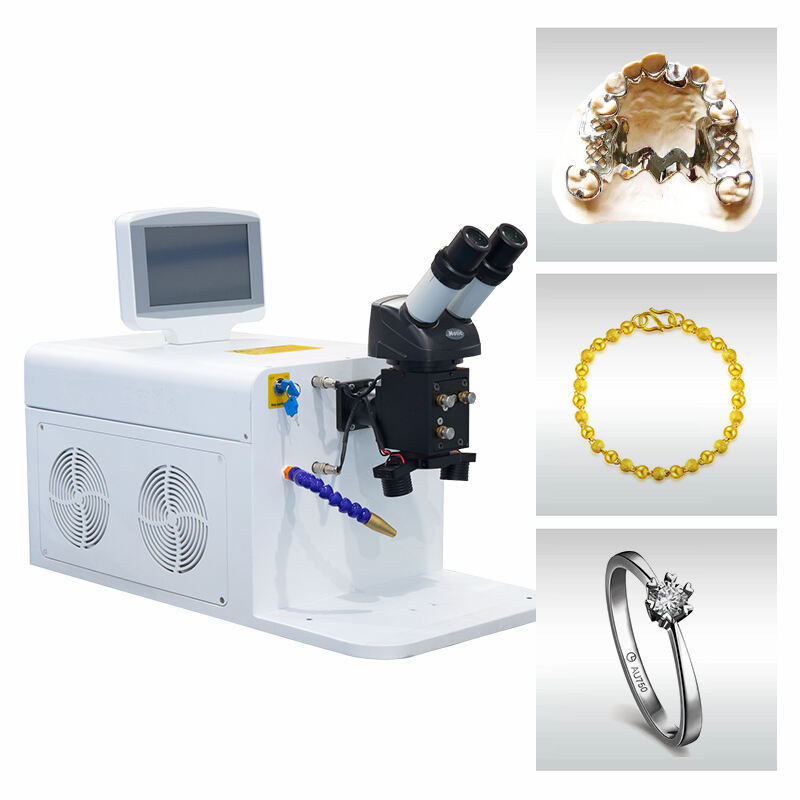
Exceptional Material Versatility and Application Range
The exceptional material versatility of the handheld laser welding machine opens unlimited possibilities across diverse industries and applications, making it an invaluable tool for modern manufacturing and repair operations. This versatility stems from the laser's ability to precisely control heat input and penetration depth, accommodating materials ranging from ultra-thin foils to thick structural components. The machine excels at welding stainless steel, aluminum, carbon steel, titanium, brass, copper, and various exotic alloys used in specialized applications. The adjustable power settings and pulse parameters enable operators to optimize welding conditions for each specific material combination, ensuring strong, durable joints regardless of the base metals involved. The handheld laser welding machine performs exceptionally well with dissimilar metal combinations that challenge traditional welding methods, such as aluminum to steel or stainless steel to copper connections. This capability proves essential in automotive manufacturing, where lightweight aluminum components must be joined to steel structures, and in electronics manufacturing, where different metals serve specific functional purposes. The machine's ability to weld materials with varying thicknesses in a single pass eliminates the need for multiple welding operations or complex joint preparations. The precision control prevents issues common with traditional methods, such as burn-through on thin materials or insufficient penetration on thick sections. The handheld laser welding machine adapts seamlessly to various joint configurations, including butt joints, lap joints, T-joints, and complex three-dimensional assemblies that would be difficult to access with conventional equipment. The technology supports both structural welding applications requiring high strength and cosmetic welding where appearance is critical, such as architectural metalwork and decorative components. The versatility extends to repair applications, where the precise heat control enables restoration of expensive components without damaging surrounding areas or affecting the base material's properties.
 EN
EN
 AR
AR
 FR
FR
 DE
DE
 JA
JA
 KO
KO
 RU
RU
 ES
ES