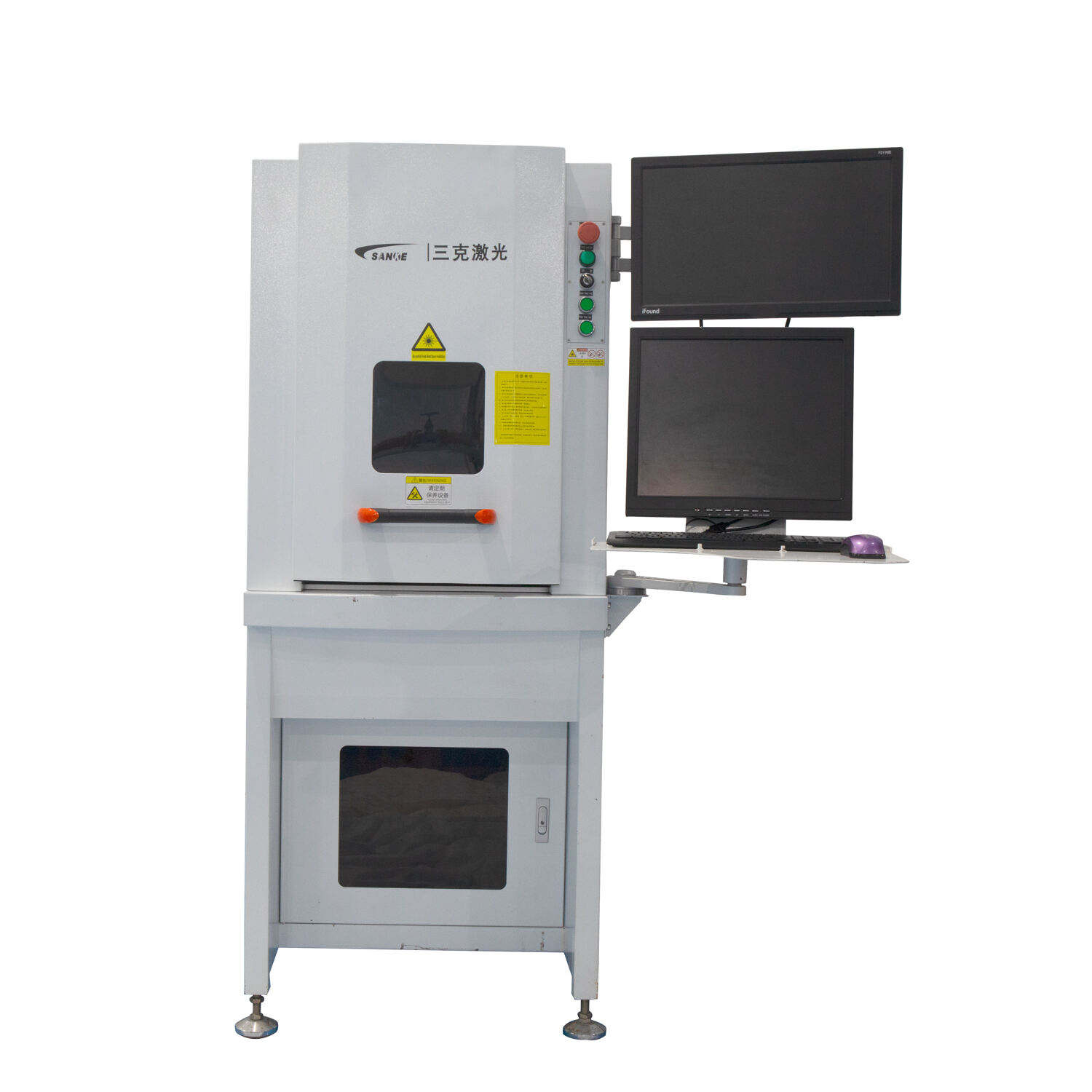
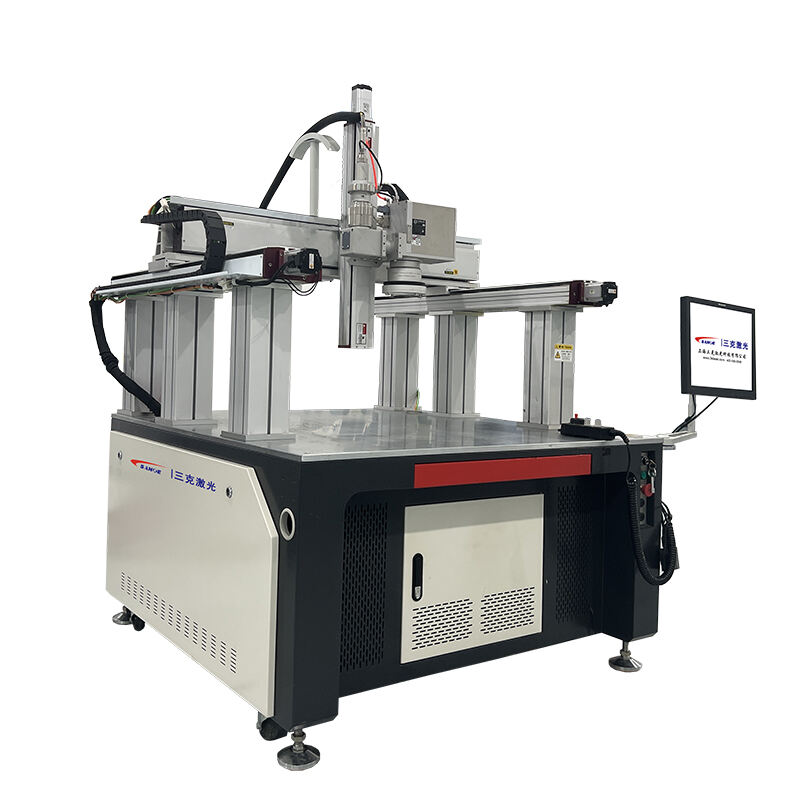
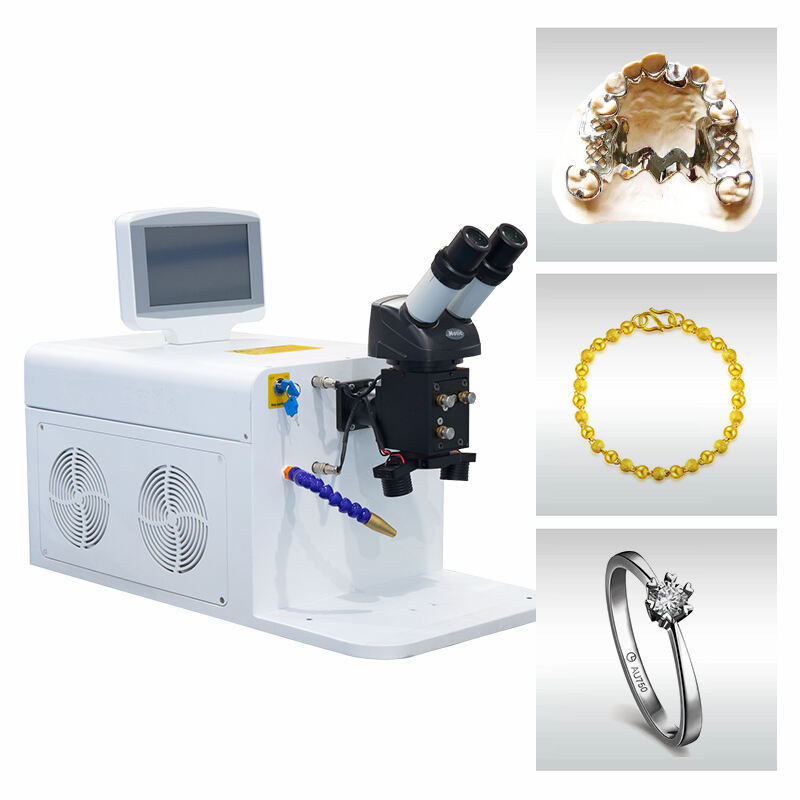
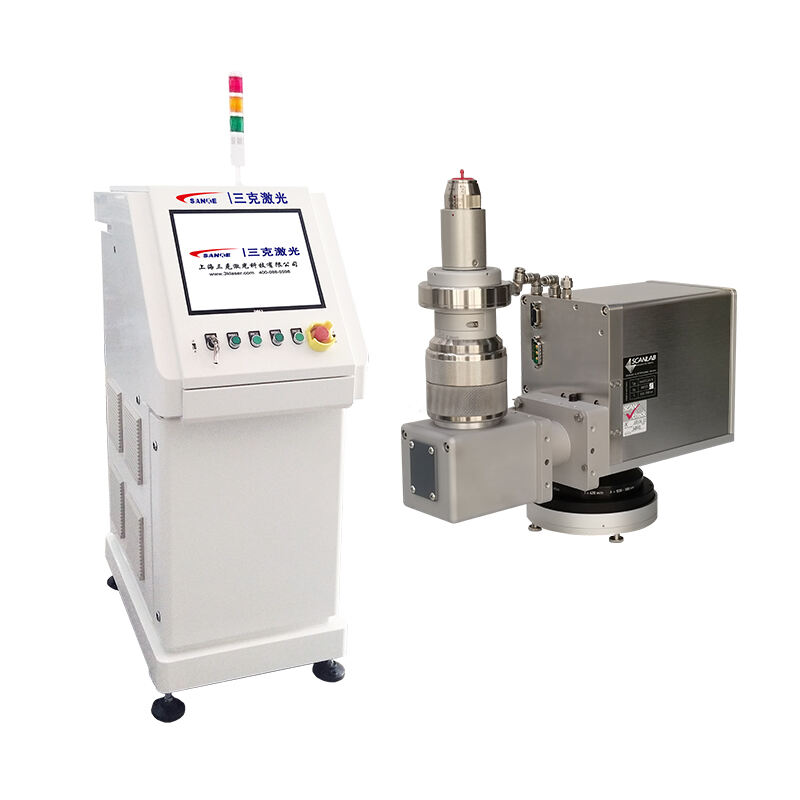
high precision laser welding process-0

High Precision Laser Welding Process: Advanced Manufacturing Solutions for Superior Quality and Efficiency

Get a Free Quote

Our representative will contact you soon.
Email
Name
Company Name
Message
0/1000

high precision laser welding process

The high precision laser welding process represents a revolutionary manufacturing technique that harnesses focused laser energy to create strong, durable joints between materials with exceptional accuracy and consistency. This advanced technology utilizes concentrated light beams to generate localized heat, melting and fusing materials at their molecular level to form seamless connections. The main functions of this sophisticated welding method include producing high-quality joints with minimal heat-affected zones, enabling precise control over weld geometry, and maintaining excellent repeatability across production runs. The high precision laser welding process operates through sophisticated beam delivery systems that can manipulate laser parameters such as power, pulse duration, and focal position to achieve optimal results for specific applications. Technological features of this process include computer-controlled positioning systems that ensure accurate beam placement, real-time monitoring capabilities that track weld quality, and adaptive optics that compensate for material variations. The process can accommodate various joint configurations including butt joints, lap joints, and T-joints while maintaining consistent penetration depths and weld profiles. Applications span numerous industries including automotive manufacturing for battery pack assembly and structural components, aerospace sector for critical flight hardware and engine parts, medical device production for surgical instruments and implantable devices, electronics industry for circuit board connections and semiconductor packaging, and jewelry making for precious metal fabrication. The high precision laser welding process excels in joining dissimilar materials, working with thin sections without distortion, and creating hermetic seals for sensitive applications. This technology supports both continuous and pulsed welding modes, accommodating different material thicknesses and joint requirements while delivering superior cosmetic appearance and mechanical properties compared to traditional welding methods.

New Product Recommendations

The high precision laser welding process delivers numerous compelling benefits that directly translate to improved manufacturing efficiency and product quality for businesses across industries. First, this technology achieves remarkable accuracy levels that surpass conventional welding methods, enabling manufacturers to create joints with tolerances measured in micrometers rather than millimeters. This enhanced precision reduces material waste, minimizes post-processing requirements, and ensures consistent product dimensions that meet stringent quality standards. Speed represents another significant advantage, as the high precision laser welding process completes joints in fractions of the time required by traditional techniques. Faster processing translates to higher production throughput, reduced labor costs, and quicker delivery times to customers, providing competitive advantages in fast-paced markets. The process generates minimal heat-affected zones, preserving the original material properties surrounding weld areas and preventing thermal distortion that often compromises part geometry in conventional welding. This controlled heat input proves especially valuable when working with heat-sensitive materials or thin sections that would otherwise warp or degrade under traditional welding conditions. Flexibility stands as a key operational benefit, allowing manufacturers to switch between different materials, thicknesses, and joint configurations without extensive setup changes or tooling modifications. The high precision laser welding process accommodates various production volumes efficiently, from prototype development through high-volume manufacturing runs. Quality consistency remains remarkably stable throughout production cycles, reducing defect rates and inspection requirements while building customer confidence in finished products. The process produces clean, aesthetically pleasing welds that often eliminate finishing operations, saving time and labor costs while improving final product appearance. Automation compatibility enables seamless integration with robotic systems and computer-controlled production lines, reducing manual intervention and associated labor costs. Energy efficiency surpasses traditional welding methods, consuming less power while delivering superior results, contributing to reduced operational costs and environmental sustainability goals that increasingly matter to modern manufacturers.

Tips And Tricks

How does the maintenance of a laser drilling machine impact its performance and lifespan?

19

Nov

How does the maintenance of a laser drilling machine impact its performance and lifespan?

Proper maintenance of industrial laser drilling equipment represents one of the most critical factors determining operational efficiency and equipment longevity in modern manufacturing environments. When organizations invest in precision drilling tec...
View More
How do I ensure the safety of operators when using a laser drilling machine?

19

Nov

How do I ensure the safety of operators when using a laser drilling machine?

Laser drilling machines have revolutionized precision manufacturing across industries, offering unparalleled accuracy and efficiency for creating micro-holes in various materials. However, the powerful laser beams used in these systems pose significa...
View More
How does the maintenance of precision laser cutting machines impact their longevity and performance, and what are some tips for effective machine maintenance?

19

Nov

How does the maintenance of precision laser cutting machines impact their longevity and performance, and what are some tips for effective machine maintenance?

Precision laser cutting machines represent a significant investment for manufacturing facilities, and their proper maintenance directly correlates with operational efficiency, production quality, and equipment lifespan. These sophisticated systems re...
View More
What are the advantages of using a laser welding machine over traditional welding methods?

19

Nov

What are the advantages of using a laser welding machine over traditional welding methods?

Modern manufacturing processes continue to evolve with technological advancements, and welding technology stands at the forefront of this transformation. Among the most significant developments in recent years is the emergence of the laser welding ma...
View More

Get a Free Quote

Our representative will contact you soon.
Email
Name
Company Name
Message
0/1000

high precision laser welding process

Unmatched Precision and Accuracy Control

Unmatched Precision and Accuracy Control

The high precision laser welding process stands out in manufacturing due to its extraordinary ability to deliver precise, repeatable results that exceed the capabilities of conventional welding technologies. This remarkable precision stems from advanced beam control systems that manipulate laser parameters with microscopic accuracy, allowing operators to position welds within tolerances of just a few micrometers. The technology employs sophisticated optical systems that focus laser energy into extremely small spot sizes, typically ranging from 10 to 100 micrometers in diameter, enabling precise energy delivery exactly where needed without affecting surrounding areas. Computer-controlled positioning systems work in conjunction with real-time feedback mechanisms to maintain consistent weld placement across thousands of production cycles. This level of control proves invaluable in industries where dimensional accuracy directly impacts product performance and safety, such as medical device manufacturing where surgical instruments must meet exacting specifications, or aerospace applications where structural integrity depends on precise joint geometry. The high precision laser welding process maintains consistent penetration depths and weld profiles regardless of operator skill levels, eliminating human variability that often affects traditional welding quality. Advanced monitoring systems track critical parameters throughout each weld cycle, detecting deviations instantly and making automatic adjustments to maintain optimal conditions. This precision extends to complex geometries and hard-to-reach locations where conventional welding tools cannot operate effectively. Manufacturers benefit from reduced inspection requirements, lower rejection rates, and improved customer satisfaction as products consistently meet or exceed quality expectations. The ability to create precise joints enables designers to optimize part geometries for weight reduction and performance enhancement while maintaining structural integrity. This precision advantage translates directly to competitive benefits in markets where quality, reliability, and consistency determine success, making the high precision laser welding process an essential technology for forward-thinking manufacturers.
Superior Material Compatibility and Versatility

Superior Material Compatibility and Versatility

The high precision laser welding process demonstrates exceptional versatility in handling diverse materials and challenging applications that would be difficult or impossible with traditional welding methods. This remarkable capability stems from the precise control over heat input and energy distribution that laser technology provides, allowing successful joining of materials with vastly different melting points, thermal conductivities, and metallurgical properties. The process excels at welding dissimilar materials such as stainless steel to aluminum, copper to steel, and various titanium alloys to other metals, opening new possibilities for innovative product designs that optimize material properties for specific functions. Thin materials, particularly those under 1mm thickness, benefit tremendously from the controlled heat input of the high precision laser welding process, as traditional methods often cause warping, burn-through, or other thermal damage that compromises part integrity. The technology successfully processes exotic materials including superalloys, precious metals, and specialty ceramics that require careful thermal management to preserve their unique properties. Heat-sensitive components such as electronic assemblies, battery cells, and medical implants can be joined without damaging temperature-sensitive elements or altering critical material characteristics. The process accommodates various joint configurations from simple overlap welds to complex three-dimensional assemblies, adapting to different production requirements without extensive tooling changes. Surface preparation requirements remain minimal compared to conventional welding, as the high-energy laser beam can penetrate surface oxides and contaminants that would interfere with other joining methods. This versatility extends to different production volumes and part sizes, from microscopic electronic components to large structural assemblies, demonstrating the scalability that makes the high precision laser welding process suitable for diverse manufacturing environments. The ability to work with coated materials, including galvanized steels and polymer-coated substrates, further expands application possibilities while maintaining joint quality and durability.
Enhanced Production Efficiency and Cost Effectiveness

Enhanced Production Efficiency and Cost Effectiveness

The high precision laser welding process revolutionizes manufacturing economics by delivering substantial improvements in production efficiency while simultaneously reducing operational costs across multiple aspects of the manufacturing process. Processing speeds significantly exceed traditional welding methods, with cycle times often reduced by 50-80 percent compared to conventional techniques, enabling manufacturers to increase throughput without additional equipment investments or facility expansions. This speed advantage translates directly to higher productivity and faster return on investment for production equipment. The process requires minimal setup time between different jobs or material changes, as parameter adjustments can be made quickly through computer controls rather than physical tooling modifications. Automation integration capabilities allow seamless incorporation into existing production lines or new automated systems, reducing labor requirements while improving consistency and reducing human error factors that can impact quality and efficiency. The high precision laser welding process eliminates many secondary operations that traditional welding requires, such as extensive cleaning, grinding, or finishing work, as the clean, precise welds often meet final specifications without additional processing. This reduction in post-welding operations saves significant labor time and associated costs while improving overall production flow. Energy consumption remains remarkably low compared to other welding technologies, as the focused laser energy delivers heat exactly where needed without waste, contributing to reduced utility costs and improved environmental sustainability metrics that increasingly matter to customers and regulatory bodies. Material utilization improves substantially due to minimal waste generation and reduced rework requirements, as the consistent quality and precision of laser welds result in higher first-pass yield rates. Maintenance requirements for laser welding equipment remain relatively low, with longer intervals between service needs compared to traditional welding equipment that experiences more wear from mechanical contact and higher operating temperatures. The combination of these efficiency improvements creates compelling economic advantages that justify the initial technology investment through ongoing operational savings and improved competitiveness in demanding markets.

Get a Free Quote

Our representative will contact you soon.
Email
Name
Company Name
Message
0/1000