 EN
 AR
 FR
 DE
 JA
 KO
 RU
 ES


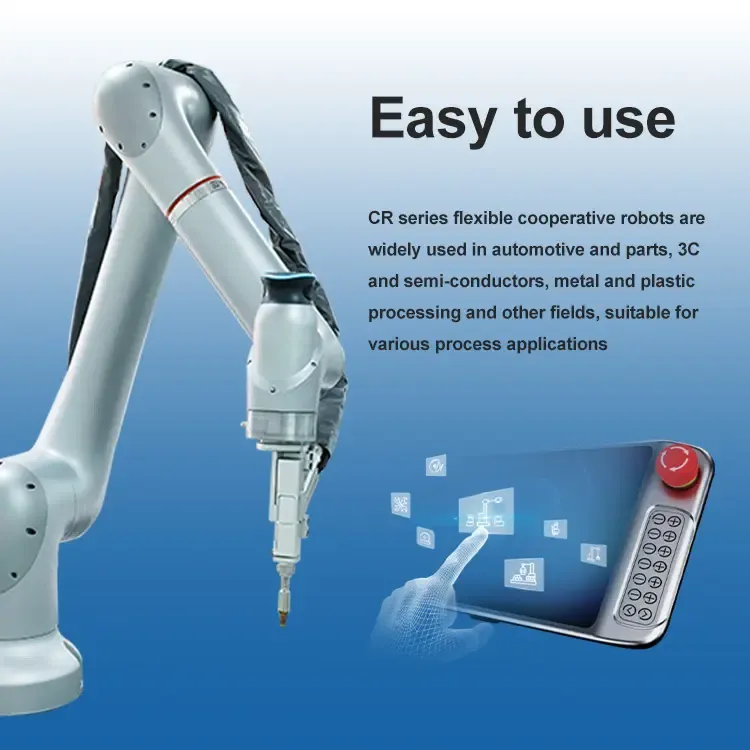
Laser Welding Robot Technology combines a focused laser beam, a programmable robot, and process controls to join parts along a planned path. Understanding how Laser Welding Robot Technology works means following the job from part preparation and programming to beam delivery, motion, and quality checks. Each stage must fit the material, joint, and production objective.
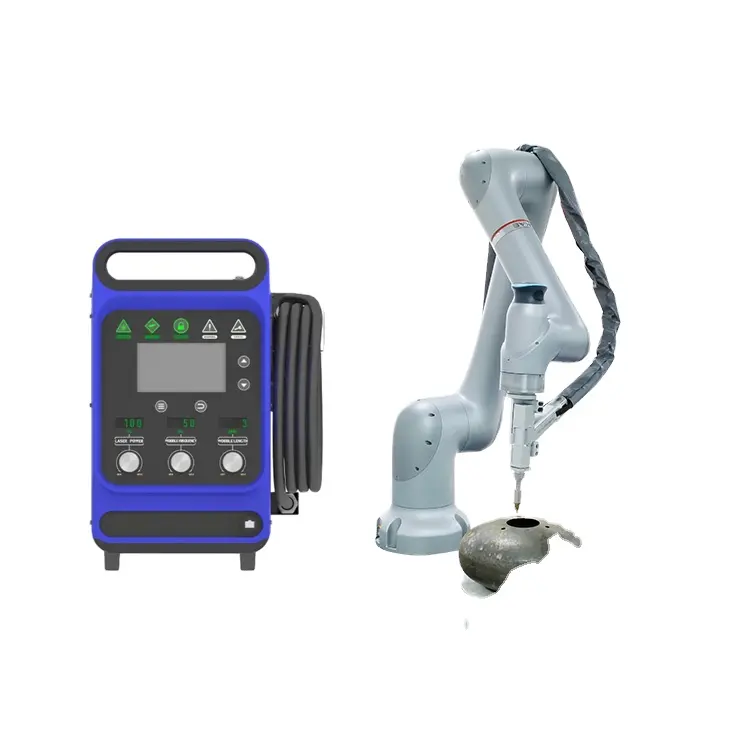
In a typical cell, an engineer defines the weld geometry, positions the workpiece, and sets process parameters before production begins. Laser Welding Robot Technology then synchronizes the programmed movement with laser output. The exact setup varies with part design and material, but the operating logic follows a clear sequence: prepare, locate, focus, weld, and verify.
How the welding sequence is created
Part preparation and job definition
The process starts with a joint that can be reached consistently. Operators consider seam location, fit-up, surface condition, material thickness, and the way the part will be held. Laser Welding Robot Technology depends on repeatable positioning because a narrow beam requires accurate alignment with the joint. Cleaning and fixture design therefore matter before the robot moves.
Next, the team establishes the weld path and identifies its start, end, corners, and transitions. Laser Welding Robot Technology uses these instructions as the movement plan, while the process recipe defines settings such as laser power, travel speed, focus position, and shielding gas where applicable. Parameters must be developed for the specific joint rather than copied without validation.
Programming the path and applying the beam
A robot program converts the desired seam into coordinated motions across its axes. The tool center point, torch or optics angle, stand-off distance, and approach direction are checked along the path. Laser Welding Robot Technology relies on this geometry to keep the beam aimed at the joint as the arm changes position. Smooth transitions help avoid unintended pauses or abrupt changes in travel.
During welding, a laser source generates the beam and an optical delivery system directs it toward the workpiece. The focused energy heats the joint locally; depending on the procedure, the material melts at the surface or forms a deeper, narrow weld pool. Laser Welding Robot Technology coordinates beam emission with robot movement so energy is applied where the programmed seam requires it.
How robot, optics, and controls work together
Motion coordination and beam delivery
The robot provides reach and repeatable motion, while the processing head holds the optics that focus and direct the beam. A controller manages the programmed path and interfaces with the laser source and related equipment. In Laser Welding Robot Technology, these elements must operate as one system: a correct path is not enough if focus, timing, or beam delivery does not match it.
A six-axis arm can approach a seam from different orientations, which is useful when a part has angled faces or multiple weld locations. Engineers still need to assess reach, collision risk, wrist limits, and cable routing. Laser Welding Robot Technology benefits from a path that respects these physical constraints instead of asking the arm to follow an idealized line it cannot safely reach.
Fixtures, sensing, and process signals
Fixtures establish the relationship between the workpiece and the programmed coordinate system. If a part shifts, the beam path may no longer align with the joint, so clamping and locating features need to be designed for the production task. Laser Welding Robot Technology may also use seam finding or vision tools to detect part position and compensate for defined variations.
Sensors and control signals can help the cell respond to process conditions, but their role depends on the equipment and application. They may confirm part presence, support seam tracking, or monitor selected operating values. In Laser Welding Robot Technology, sensing does not remove the need for sound fixtures and a validated procedure; it adds information that can improve consistency when configured appropriately.
How a cell is validated for production
Parameter development and sample trials
Before release, engineers run trials on representative parts and assess the weld against the required acceptance criteria. They adjust process settings and robot motion together, since travel speed, focus, and power interact. Laser Welding Robot Technology should be qualified using the real material, joint geometry, and fit-up range expected in production, not only a convenient test coupon.
Inspection may include visual examination, dimensional checks, or suitable destructive and nondestructive tests specified by the application. The goal is to confirm that the joint meets its functional requirements and that the process remains repeatable. Laser Welding Robot Technology needs documented settings and inspection methods so that changes in material, fixtures, or programming trigger an appropriate review.
Production readiness and ongoing control
A production-ready cell includes more than a robot and laser. It also requires appropriate guarding, interlocks, extraction or ventilation where needed, operator training, maintenance access, and a controlled workflow for loading parts. Laser Welding Robot Technology must be integrated into the facility's safety procedures, with responsibilities and checks established before routine operation.
Once production begins, teams track relevant process records, inspect output at the planned frequency, and respond to deviations through an established method. Wear, contamination, fixture damage, or program changes can affect results. Laser Welding Robot Technology remains dependable only when equipment condition and process settings are maintained, and when changes are tested rather than assumed to be harmless.
FAQ
What happens when a laser welding robot starts a cycle?
The cell confirms required conditions, locates or verifies the part, and moves the processing head to its start position. Laser Welding Robot Technology then coordinates the programmed path with laser activation. After the seam is complete, the beam is switched off and the robot moves to a safe position for unloading or the next operation.
Why does programming accuracy matter?
A focused beam must stay aligned with the joint, so small errors in part location, tool geometry, or path definition can affect the weld. Laser Welding Robot Technology depends on accurate calibration and suitable fixtures. Trial runs help reveal access or motion issues before a program is used for routine production.
Can the same setup weld every part type?
No. Materials, thicknesses, joint designs, tolerances, and production requirements can call for different fixtures, paths, and process settings. Laser Welding Robot Technology is adaptable, but each application needs review and validation. A change in material or geometry should prompt an engineering check rather than an assumption that the existing recipe will transfer unchanged.